How Long Should a Rental Lease Be in Florida?
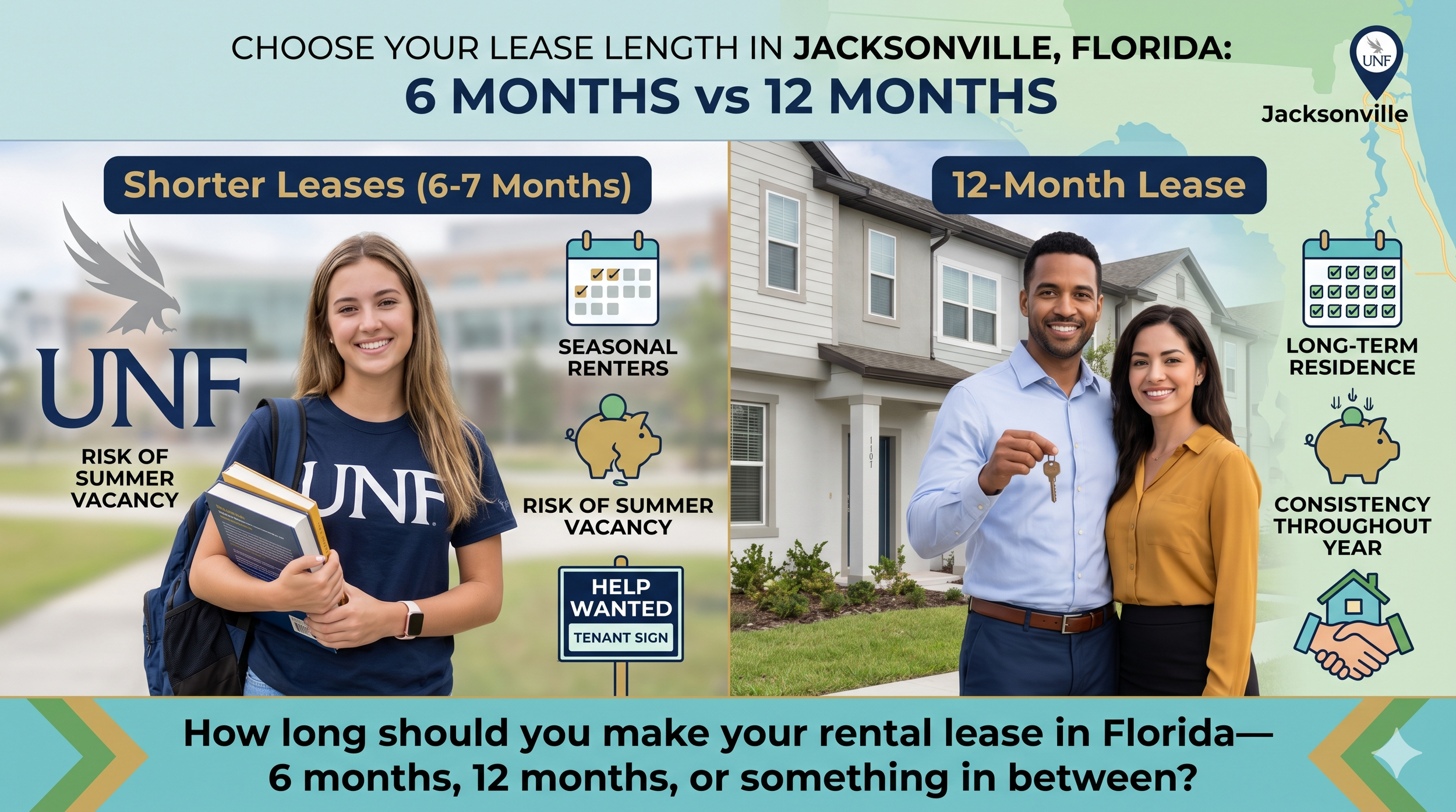
How long should you make your rental lease in Florida—6 months, 12 months, or something in between?
In most cases, a 12-month lease gives you the best balance of stability and income—but in areas like Jacksonville near UNF, the “right” answer really depends on who you want to attract and how you want to manage vacancy.
Lease Length Isn’t Just About Time—It’s About Tenant Type
Here’s the part a lot of owners don’t think about.
Your lease length quietly determines who even applies to your property.
If you’re open to shorter leases—6 or 7 months—you’re more likely to attract:
College students
Seasonal renters
People with short-term plans
But if you stick to a 12-month lease, you naturally filter toward:
Tenants planning to stay longer
More stable income situations
People treating the home like a long-term residence
And in areas near the University of North Florida, that matters more than you’d think.
Because just being near UNF doesn’t mean your property has to function like student housing.
The Biggest Risk: Summer Vacancy Near UNF
Let’s talk about what actually costs you money.
If your property tends to attract UNF students and you allow shorter leases, you can almost guarantee this pattern:
Lease ends in late spring
Tenant moves out
Property sits vacant for part of the summer
Sometimes that’s a month. Sometimes it’s two or three.
And now you’re covering:
Lost rent
Turnover costs
Marketing and leasing again
That adds up quickly.
A 12-month lease helps smooth that out, keeping income consistent through the summer—even if the tenant isn’t physically living there full-time.
The Trade-Off: Stability vs Flexibility
Now, 12-month leases aren’t perfect. There are trade-offs.
With a 12-month lease:
✔ More consistent income
✔ Less frequent turnover
✔ Fewer seasonal vacancies
✖ Less flexibility if the tenant isn’t a great fit
✖ Risk of early move-outs or lease breaks
With shorter leases:
✔ More flexibility
✔ Easier to adjust rent more frequently
✖ Higher turnover
✖ Greater vacancy risk (especially near UNF)
So it really comes down to this:
Do you want consistency—or are you willing to manage more moving parts?
What About Student Renters and Roommate Setups?
This is another piece that often gets overlooked.
When you’re near UNF and open to shorter leases, you’re more likely to see:
Groups of roommates applying together
Friends splitting rent
More turnover tied to school schedules
That’s not necessarily a bad thing. But it is a different management style.
Compared to:
A single household
A couple or working professional
Someone planning to stay multiple years
Those tend to align better with 12-month lease structures.
So again, it comes back to intention.
You’re not just choosing a lease length—you’re choosing a rental model.
So… What Should You Do?
Here’s the honest answer.
If your goal is:
Steady income
Lower vacancy
Simpler management
A 12-month lease is usually the better choice, especially in Jacksonville and surrounding areas like UNF.
But if you’re intentionally targeting:
Students
Short-term renters
More flexible leasing cycles
Then shorter leases can work—you just need to plan for the gaps.
Final Thoughts
Lease length isn’t just a checkbox in your lease agreement.
It shapes your tenant pool, your vacancy risk, and how hands-on your property becomes.
And in areas like Jacksonville near UNF, those small decisions can have a big impact over time.
If you’re not sure what makes the most sense for your property, we’re always happy to talk it through and help you build a strategy that actually fits your goals.
👉 https://www.crossviewpropertymanagement.com/
FAQs
Q: How long should a rental lease be in Florida?
A: Most Florida landlords use 12-month leases because they provide stable income and reduce turnover. However, shorter leases can make sense depending on your target tenant and location.
Q: Are 12-month leases better for rental properties near UNF in Jacksonville?
A: In many cases, yes. A 12-month lease helps reduce summer vacancy, which is common in college-driven areas like those near the University of North Florida.
Q: Do shorter leases increase vacancy risk in Jacksonville rentals?
A: They can. Shorter leases often align with school schedules, which may leave your property vacant during off-season months like summer.
Q: Should I rent my property near UNF to students or professionals?
A: It depends on your goals. Students may mean higher turnover and roommate setups, while professionals often bring longer stays and more stability.
Q: Can I switch from short-term leases to 12-month leases later?
A: Yes, but it may take time to reposition your property and attract a different type of tenant. Lease structure plays a big role in who applies.