

Is No AC Considered an Emergency in Florida?
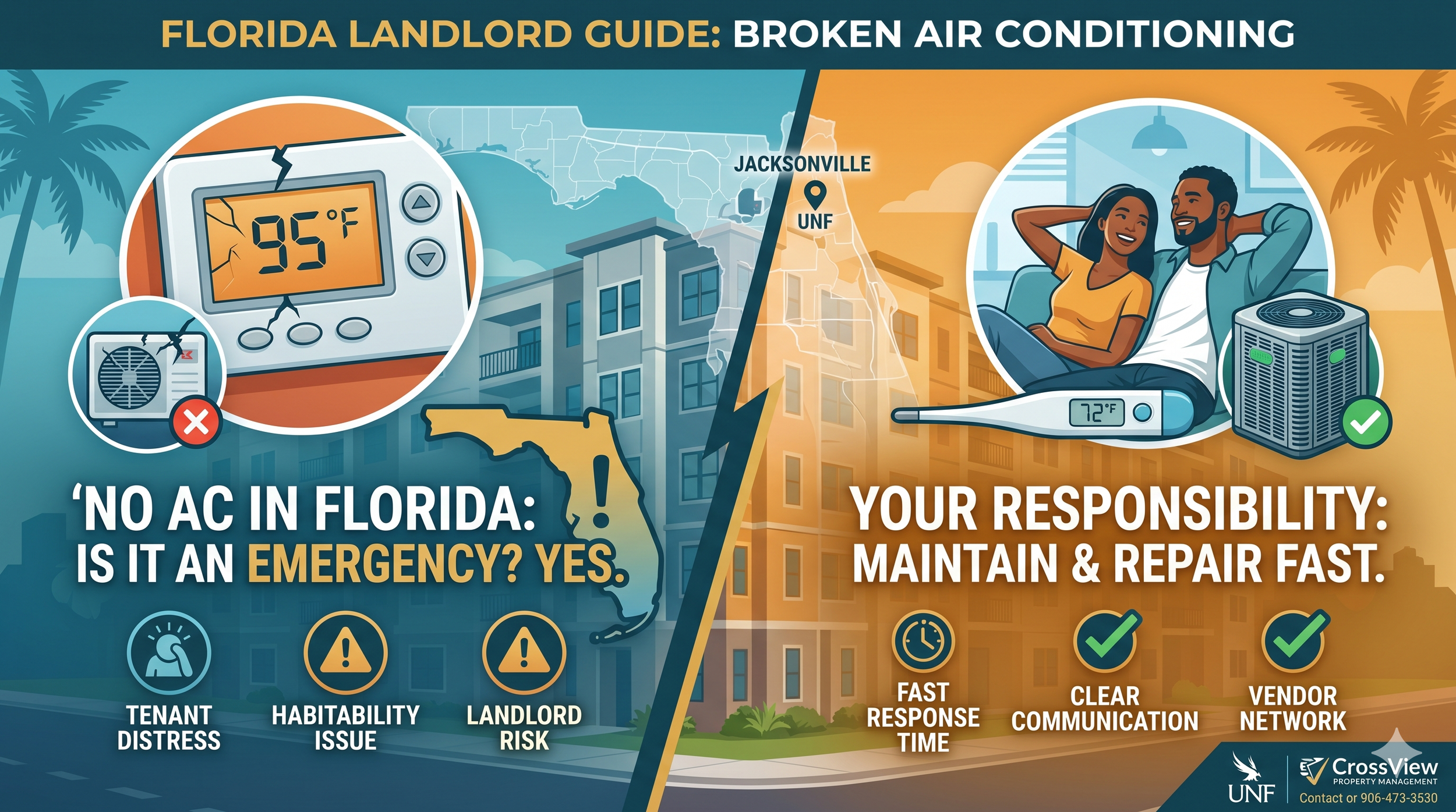
If the air conditioning goes out in your Florida rental, is that considered an emergency?
In most cases, yes—especially in Florida heat. While the law doesn’t always spell it out directly, lack of AC can quickly become a habitability issue, and delays can put you at risk as a landlord.
Florida Law Doesn’t Say It the Way You Think
Here’s where things get a little tricky.
Florida law requires landlords to maintain habitable living conditions, but it doesn’t specifically say:
“Air conditioning must always be working.”
However…
If your property has AC, you are responsible for maintaining it in working condition.
And in Florida, where heat and humidity aren’t just uncomfortable but constant, a broken AC system can quickly cross the line from inconvenience to problem.
Why No AC Becomes an “Emergency” in Real Life
Even if you don’t label it that way on paper, tenants will.
And honestly, they’re not wrong.
In places like Jacksonville, especially during the summer months:
Indoor temperatures can rise fast
Humidity builds quickly
Living conditions become uncomfortable within hours—not days
So what happens?
Tenants start calling repeatedly
Frustration builds
Requests escalate
And if it drags out, it can turn into:
Lease violations
Repair-and-deduct situations
Early move-outs
That’s where the real risk comes in.
The Bigger Issue: Response Time
This is what matters most.
Not just whether the AC is out—but how quickly you respond.
Because from a tenant’s perspective:
Same-day response = “handled”
Multi-day delay = “problem”
Even if parts take time or vendors are booked, communication and urgency make a huge difference.
This is where a lot of self-managing owners run into trouble.
It’s not the repair—it’s the delay.
Jacksonville Rentals: What We See Most
Around Jacksonville and areas like UNF, AC issues tend to follow a pattern:
Systems fail during peak heat (because they’re working hardest)
Vendors get backed up quickly
Tenants expect fast action—because they need it
And if there’s no clear plan in place, things fall apart fast.
That’s why having:
A go-to HVAC vendor
After-hours contact options
Clear tenant communication
…makes all the difference.
What About Window Units or Temporary Fixes?
This comes up a lot.
If the system goes down, some owners consider:
Window units
Portable AC units
These can help as a temporary solution, especially if repairs are delayed.
But they’re not a long-term fix—and they don’t replace the responsibility to repair the primary system.
Still, offering something short-term can go a long way in keeping the situation under control.
So… Is It Legally an Emergency?
Here’s the honest answer.
Florida law doesn’t always label it clearly as an “emergency.”
But in practice?
It’s treated like one.
Because of:
Climate conditions
Tenant expectations
Habitability concerns
And most importantly:
the consequences of not acting quickly
Final Thoughts
No AC in a Florida rental might not always be spelled out as an emergency—but it functions like one.
The faster you respond, the fewer problems you create.
And in a place like Jacksonville, where heat isn’t seasonal—it’s constant—that response time matters more than anything.
If you’re not sure how to set up systems to handle situations like this quickly and smoothly, we’re always here to help.
👉 https://www.crossviewpropertymanagement.com/
FAQs
Q: Is no AC considered an emergency in Florida rental properties?
A: While Florida law doesn’t always explicitly define it as an emergency, lack of AC can quickly impact habitability—especially in hot climates like Jacksonville—so it’s treated with urgency.
Q: How fast should a landlord fix AC in Florida?
A: Landlords should respond as quickly as possible—ideally same-day or next-day. Delays can lead to tenant complaints or lease issues.
Q: Are landlords required to provide air conditioning in Florida?
A: Not always—but if the property has AC, the landlord is responsible for maintaining it in working condition.
Q: What can tenants do if AC isn’t fixed in Florida?
A: Depending on the situation, tenants may issue formal notice, request repairs, or take further action if the issue affects habitability.
Q: Should landlords provide temporary cooling if AC breaks?
A: It’s not always required, but providing a temporary solution like a portable unit can help maintain tenant satisfaction while repairs are made.