
What Every Accidental Landlord Needs to Know Before Renting Their Home
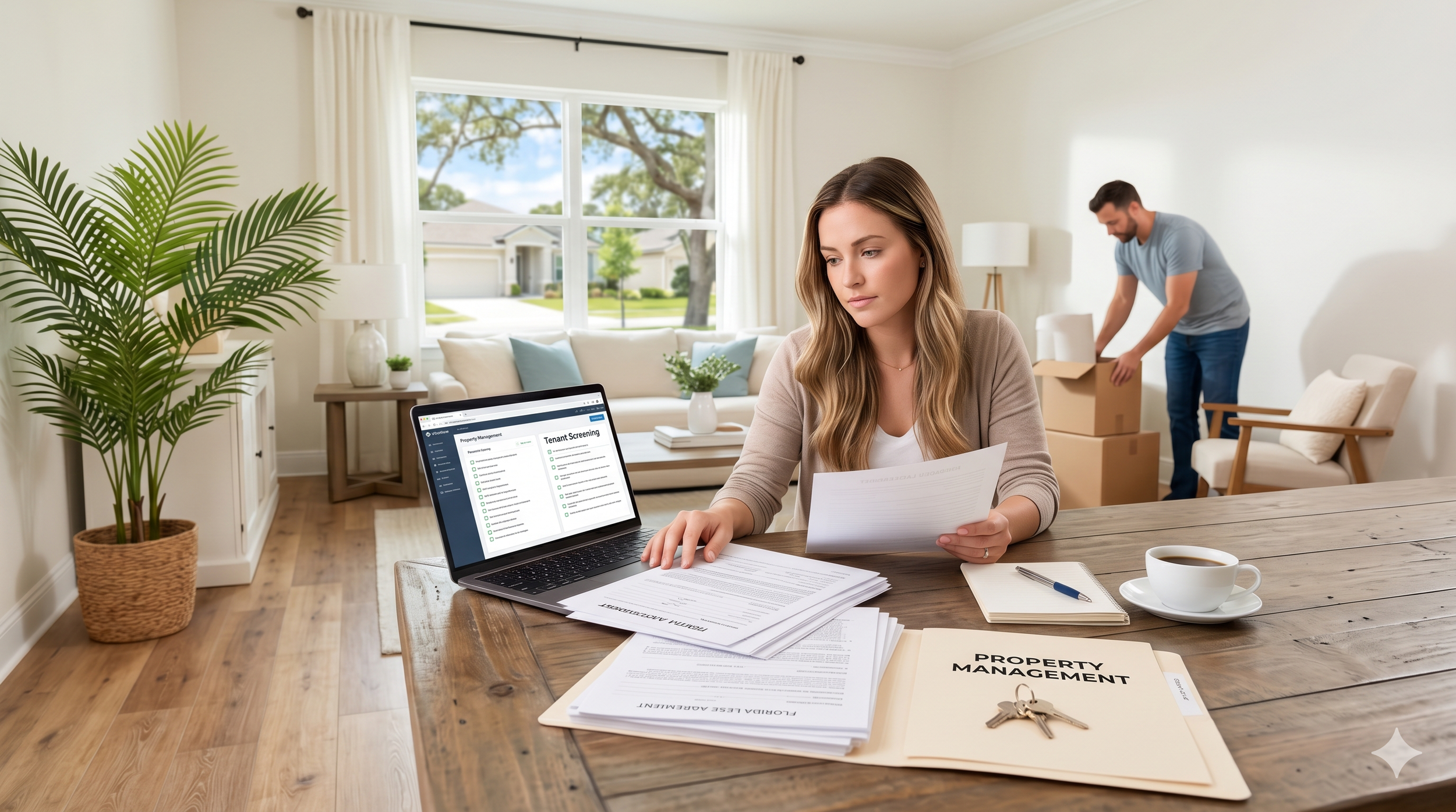
What does an accidental landlord need to know before renting their home in Florida? The single most important thing is this: who you put in your home matters more than almost anything else. A bad tenant can cost you months of lost rent, thousands in damage, and a legal process that drags on far longer than you expect.
So you didn't exactly plan to become a landlord. Maybe you relocated for work, inherited a property, or decided to hold onto your home instead of selling in a slow market. Whatever brought you here, you're now sitting on a rental property in Northeast Florida — and you're trying to figure out what to do next.
Here's the deal: renting out a home isn't complicated, but it's unforgiving when you skip steps. And the step most accidental landlords underestimate? Tenant screening.
The Biggest Risk Isn't the Property — It's the Wrong Tenant
You can fix a leaky faucet. You can repaint a scuffed wall. What you can't easily fix is placing the wrong person in your home and then spending the next four to six months trying to get them out.
In Florida, the eviction process is structured, and it has to be followed precisely. That means proper written notices, on the correct forms, delivered the correct way, within the correct timeframe. If you show up in court and even one of those steps is wrong — wrong form, wrong delivery method, wrong number of days — a judge will dismiss the case. You'll start over. Meanwhile, that tenant is still in your home, and you're still not getting paid.
This isn't a scare tactic. It's just how it works.
Why Self-Managing Landlords Are Targeted by Problem Tenants
This one catches a lot of people off guard, but it's worth saying plainly: some of the least desirable tenants actively seek out self-managing landlords.
Why? Because they know the system. They've been through evictions before. They understand that a private owner posting a Craigslist listing probably doesn't have access to the same screening tools a professional property management company does. They know they can show you a pay stub that looks legitimate but isn't. They know that if they sit down with you face-to-face and tell you a compelling story about why their credit took a hit, there's a real chance you'll give them a pass.
And honestly — that's not a knock on you. You're a person, not a company. You're going to feel for someone who seems genuine. That's human. But it's also exactly what a seasoned bad actor is counting on.
Professional property managers in Jacksonville and across Northeast Florida use tools and processes that most private owners simply don't have — thorough background checks, income verification, eviction history searches, and the ability to evaluate applications without the emotional pull of a face-to-face conversation.
What Good Tenant Screening Actually Looks Like
If you're going to self-manage, you need to know what you're screening for — and how to do it consistently.
Credit history is a starting point, not the whole picture. Someone with a 620 score but a clean rental history may be a better applicant than someone with a 700 who's had a prior eviction.
Income verification should go beyond a single pay stub. Request two to three months of bank statements alongside pay stubs. Forged pay stubs are common, and cross-referencing deposits against stated income is one of the fastest ways to catch them.
Eviction history is non-negotiable. This is the one that saves landlords in Jacksonville, Orange Park, St. Johns County, and everywhere else. A prior eviction doesn't automatically disqualify someone, but it demands a conversation and a closer look.
Rental history and references from previous landlords — actual previous landlords, not a friend pretending to be one — round out the picture.
Apply these standards consistently to every applicant. Consistency isn't just good practice; it's a Fair Housing requirement.
Florida Law Is Not Flexible on This
Florida's landlord-tenant law (Chapter 83 of the Florida Statutes) is fairly clear about notice requirements, eviction procedures, and the rights of both parties. The problem is that most accidental landlords in Jacksonville don't know what they don't know.
A three-day notice for nonpayment has to be delivered correctly. A notice to cure a lease violation has different timing requirements. Security deposit handling has its own set of rules — how it's held, what it earns, when it has to be returned, and what happens if you miss the deadline.
Getting any of these wrong doesn't just slow you down. It can expose you to legal liability.
When to Seriously Consider Professional Property Management
If any of this sounds overwhelming, that's okay — it genuinely is a lot to manage on your own, especially if property management isn't your day job.
CrossView Property Management works with accidental landlords across Duval, Clay, and St. Johns counties — in Jacksonville, Orange Park, Fleming Island, Middleburg, Green Cove Springs, St. Augustine, Ponte Vedra Beach, and Nocatee. We handle tenant screening, lease preparation, move-in coordination, rent collection, maintenance, and everything in between.
More importantly, we know what problem applicants look like. We see them regularly. And we have the tools to catch what a private owner typically can't.
Renting your home should generate income and peace of mind — not stress you out every time your phone rings.
If you're an accidental landlord trying to figure out your next move, we'd love to talk. Reach out to CrossView Property Management for a free consultation — no pressure, just a real conversation about what makes sense for your property. 904-855-7933
Frequently Asked Questions
Q: What does an accidental landlord need to do before renting their home in Florida? A: Before placing a tenant, you need a solid screening process, a legally compliant lease, and a clear understanding of Florida's landlord-tenant laws — including notice requirements and security deposit rules. Skipping any of these creates real financial and legal risk. If you're not sure where to start, working with a professional property manager in Jacksonville or Northeast Florida is worth considering.
Q: How do I screen tenants as a self-managing landlord in Florida? A: Start with a credit check, verified income (pay stubs plus bank statements), eviction history, and references from prior landlords. Apply the same criteria to every applicant — consistency is both good practice and a Fair Housing requirement. Be aware that forged pay stubs are more common than most landlords expect; cross-referencing deposits with stated income is one of the most effective ways to catch them.
Q: Can I evict a tenant in Jacksonville, FL if they stop paying rent? A: Yes, but the process has to be followed exactly as Florida law requires. You must deliver a proper three-day notice on the correct form and in the correct manner before filing. If any step is done incorrectly, a judge can dismiss the case and require you to start over — all while the tenant remains in your home. Many accidental landlords learn this the hard way.
Q: Why do problem tenants target self-managing landlords? A: Some tenants with prior evictions or poor rental history actively look for private, self-managing owners because they know those landlords often lack the same screening tools as professional property management companies. They also know that a face-to-face conversation with a private owner gives them a better chance of getting approved despite red flags. It's one of the strongest arguments for working with a professional property manager.
Q: Does CrossView Property Management work with accidental landlords in Jacksonville? A: Yes. We work with property owners across Duval, Clay, and St. Johns counties who find themselves with a rental property and aren't sure what to do next. We handle everything from tenant screening and leasing to maintenance and rent collection, so you don't have to figure it out on your own.