

What to Do When Your Tenant Stops Paying Rent in Florida
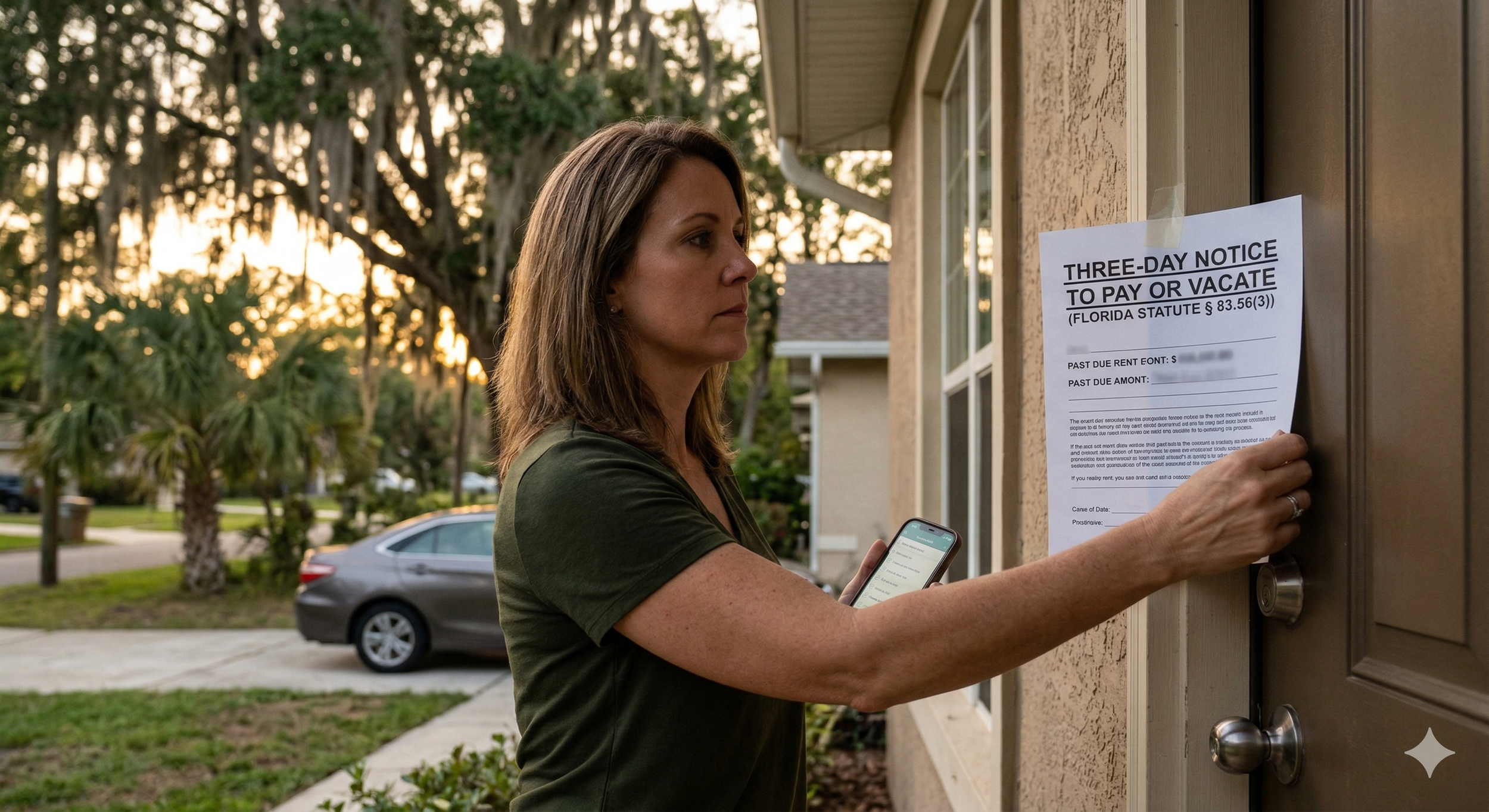
What happens when a tenant stops paying rent in Florida — and what should a landlord do first?
The moment rent is late, the clock starts. Florida law gives landlords a clear, step-by-step process for handling nonpayment — but it also demands strict compliance at every stage. One procedural mistake can delay your case by weeks, reset the process entirely, or give a non-paying tenant a legal foothold they wouldn't otherwise have. Knowing what to do — and what not to do — before you find yourself in this situation is the difference between a resolved problem and a prolonged nightmare.
Here's exactly how it works in Florida.
Step One: Confirm Rent Is Actually Late
Before anything else, check your lease. Florida law does not automatically grant tenants a grace period — rent is due on whatever date the lease specifies. However, if your lease includes a grace period clause, you must honor it before taking any action. Once that window has passed and rent remains unpaid, you can move to the next step.
Do not call, text, or negotiate informally at this point and assume it will resolve itself. It might. But if it doesn't, undocumented conversations won't help you in court. Everything from this point forward should be in writing.
Step Two: Serve a Proper Three-Day Notice
The Florida eviction process for nonpayment of rent begins with a written Three-Day Notice to Pay or Vacate. Under Florida Statute § 83.56(3), this notice gives the tenant three business days — excluding weekends and legal holidays — to either pay the full amount owed or surrender possession of the property.
This notice must be precise. It must state the exact dollar amount of rent due — not an estimate, not a rounded number. It must not include late fees or other charges unless your lease specifically defines those charges as rent. It must contain the statutory language required by Florida law. And it must be delivered correctly — by hand, posted at the property if the tenant is absent, by mail, or by email if both parties previously agreed to electronic notice in the lease.
Florida courts enforce these requirements strictly. A notice that demands only the past-due rent without also demanding possession, uses the wrong amount, or skips required language has been enough to delay or dismiss an eviction case. Get this step right.
Step Three: File the Eviction Complaint
If the tenant neither pays nor vacates within the three-day window, you can file an eviction complaint in the county court where the property is located. In Duval, Clay, and St. Johns counties, filing fees generally run around $185 for a possession-only complaint, plus additional fees for summons and service. A copy of your Three-Day Notice must accompany the complaint at filing.
Once filed, the court issues a summons and the tenant has five business days to respond. Here's a critical detail many owners don't know: in a nonpayment eviction, the tenant is generally required to deposit the alleged past-due rent into the court registry within that same five-day window. If they fail to do so, you may be entitled to a default judgment for possession without a hearing.
If the tenant does respond and contest, the court will schedule a hearing. The full process — from serving the Three-Day Notice through the sheriff executing a Writ of Possession — typically runs three to eight weeks in Florida, depending on the county and whether the tenant contests.
What You Cannot Do — Ever
Florida law prohibits self-help evictions, full stop. You cannot change the locks. You cannot remove the tenant's belongings. You cannot shut off utilities. You cannot do anything to make the property uninhabitable in hopes of forcing the tenant out. If you take any of these actions, the tenant can sue you for damages up to three times their monthly rent — and they will likely win. The only person who can physically remove a tenant from a property in Florida is a law enforcement officer acting on a court-issued Writ of Possession.
No matter how frustrated you are, the legal process is the only path.
Why Having a Property Manager Changes Everything
When a tenant stops paying rent in Jacksonville, the first 72 hours matter enormously. A property management company that handles this daily knows exactly how to serve a compliant Three-Day Notice, document delivery properly, and file without procedural errors that hand the tenant a delay. They also know when to recommend an attorney and when a situation can be resolved without court.
At CrossView Property Management, we manage rental properties across Jacksonville, Orange Park, Fleming Island, Middleburg, Green Cove Springs, Ponte Vedra Beach, Nocatee, and throughout St. Johns and Clay counties. When a tenant stops paying rent, we move quickly, correctly, and with the documentation to back it up at every step.
If you're currently dealing with a tenant not paying rent in Florida, or you want to make sure your lease and processes are set up to handle it correctly if it ever happens — reach out to CrossView Property Management for a free consultation.
Frequently Asked Questions
Q: What should I do first if my tenant stops paying rent in Florida? A: Check your lease for any grace period provision. Once that window has passed, serve a written Three-Day Notice to Pay or Vacate that complies precisely with Florida Statute § 83.56(3). The notice must state the exact rent amount due, demand both payment and possession, and be delivered correctly. Do not attempt to lock the tenant out, remove their belongings, or shut off utilities — these are illegal under Florida law regardless of how far behind on rent the tenant is.
Q: How long does the Florida eviction process take for nonpayment of rent? A: From serving the Three-Day Notice through the sheriff executing a Writ of Possession, the Florida eviction process for nonpayment of rent typically takes three to eight weeks. The timeline depends on whether the tenant contests the eviction, the court's scheduling in your county, and whether all notices and filings were completed without procedural errors. Cases where the landlord makes a mistake on the Three-Day Notice can be delayed significantly.
Q: Can a Florida landlord evict a tenant without going to court? A: No. Florida law requires a landlord to obtain a final judgment of possession from a county court before a tenant can be removed. Only a law enforcement officer — typically a sheriff — can physically remove a tenant, and only after a Writ of Possession has been issued by the court. Attempting to remove a tenant without a court order is an illegal self-help eviction and can expose the landlord to damages of up to three times the tenant's monthly rent.
Q: What happens if a tenant doesn't respond to the eviction summons in Florida? A: In a nonpayment eviction, the tenant is generally required to respond to the summons within five business days and deposit the alleged past-due rent into the court registry. If the tenant fails to respond or fails to make the required deposit, the landlord may be able to obtain a default judgment for possession without a hearing — significantly speeding up the process.
Q: What to do when a tenant stops paying rent in Jacksonville FL but won't leave? A: Follow the Florida eviction process in full — Three-Day Notice, eviction complaint filed in county court, summons served, hearing if contested, and Writ of Possession issued and executed by the Duval County Sheriff. Do not take any action to remove the tenant yourself. If you're managing this without a property manager, consulting a Florida landlord-tenant attorney is strongly advisable to avoid procedural errors that could delay or derail your case.