

Why Won't Landlords Accept Pit Bulls and Other Dog Breeds in Florida Rental Properties?
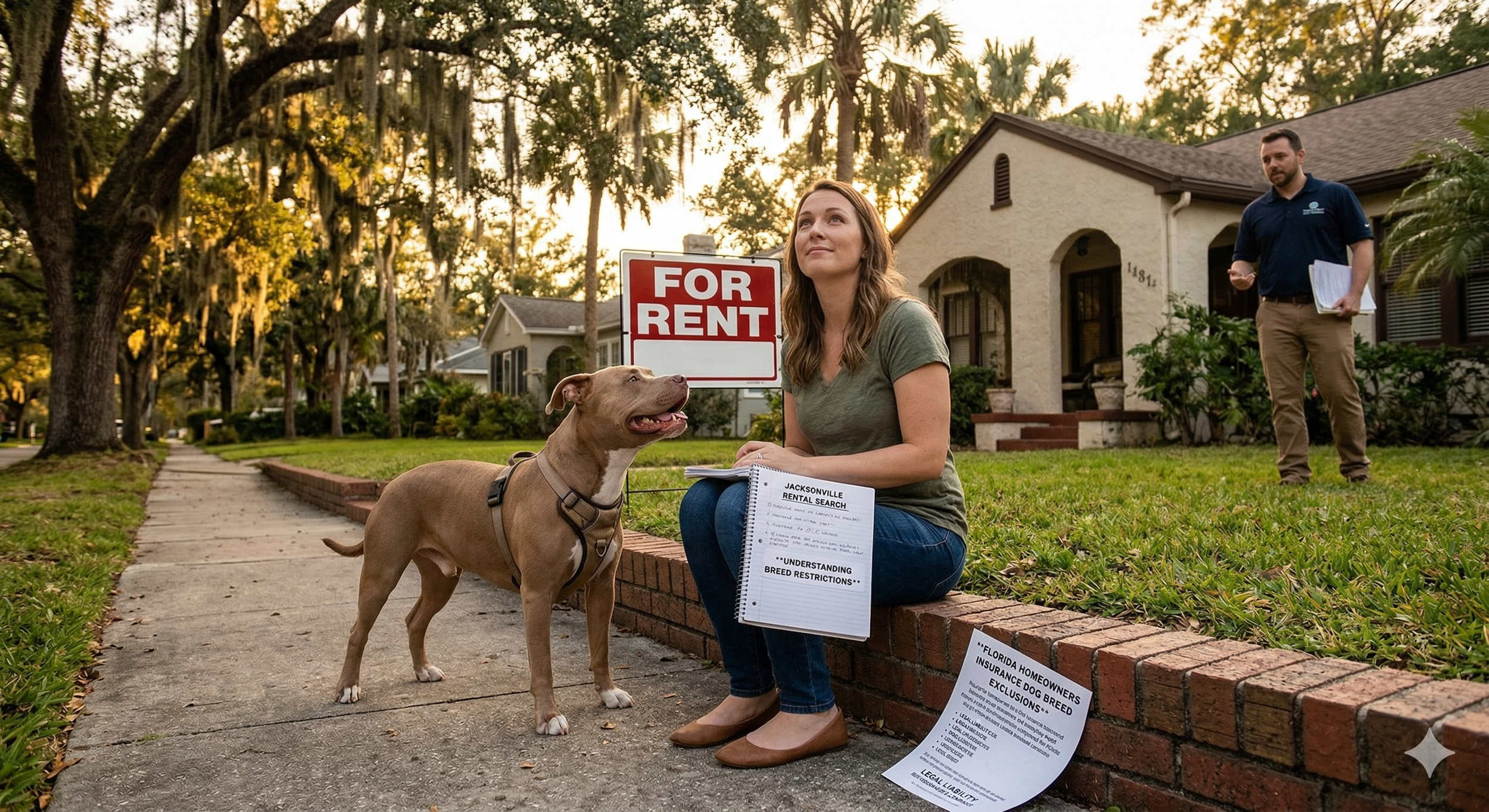
Why do so many landlords and property managers in Florida refuse to rent to tenants with pit bulls, Rottweilers, Dobermans, and similar breeds?
The honest answer isn't that your dog is a bad dog. In most cases, it comes down to one thing: homeowners insurance. Florida property owners with restricted breeds on their policy risk having their coverage canceled — sometimes with as little as 30 days' notice. No insurance means no protection on a property that may represent someone's single largest financial asset. That's a risk most owners simply won't take.
If you've been turned down repeatedly while searching for a rental in Jacksonville, Orange Park, St. Augustine, or anywhere in Northeast Florida, here's what's actually happening — and why it's not as simple as a landlord just saying no to your dog.
The Insurance Problem Behind Florida Rental Dog Breed Restrictions
Florida homeowners insurance policies commonly include what's called a breed exclusion — a specific clause that removes liability coverage for injuries or property damage caused by certain dogs. The breeds most frequently listed in Florida policies include pit bulls and pit bull-type dogs, Rottweilers, Doberman Pinschers, German Shepherds, Akitas, Chow Chows, Mastiffs, Staffordshire Terriers, wolf hybrids, and American Bulldogs. Many policies also extend exclusions to any mixed breed that contains one or more of these breeds — even if the dog looks and acts nothing like the restricted parent breed.
When a tenant with one of these dogs moves into a rental property, the owner's insurance coverage for dog-related liability effectively disappears. If that dog bites a neighbor, injures a delivery driver, or knocks someone down — even playfully — the property owner could be personally responsible for every dollar of medical bills, legal fees, and damages. Under Florida Statute § 767.01, dog owners carry strict liability for injuries their dogs cause. That financial exposure without insurance behind it is enormous.
And Florida does not prohibit insurance companies from making these breed-based decisions the way some other states do. Here, insurers can — and regularly do — restrict, exclude, or cancel policies based on breed alone.
It Can Happen Fast — and Without Warning
This isn't a theoretical concern. Insurance companies have been known to conduct drive-by inspections of properties — and if an inspector spots what appears to be a restricted breed in the backyard, the owner can receive a cancellation notice requiring proof the dog has been removed, sometimes within 30 days. The owner doesn't get a warning first. They get a letter.
At that point, the property owner is in an impossible position: ask the tenant to remove the dog, pursue an early termination of the lease, or risk losing their insurance entirely and owning a property with no liability coverage. None of those options are easy, and most owners would rather avoid the situation from the start.
This is the reality that drives restricted dog breed policies in Jacksonville rental properties and across Northeast Florida — not a judgment about your dog's personality.
What Florida's Pam Rock Act Adds to the Equation
Florida's legal landscape around dogs tightened further when the Pam Rock Act went into effect on July 1, 2025. Named after a Florida postal worker who was fatally attacked by dogs with a known history of aggression, the law increased accountability for owners of dogs officially classified as dangerous — including mandatory liability insurance of at least $100,000, microchipping, secure confinement requirements, and steeper penalties for violations.
Importantly, the Pam Rock Act is breed-neutral — it applies based on a dog's documented behavior, not its breed. But its existence signals a broader shift in how seriously Florida is treating dog-related liability. For property owners already navigating insurance restrictions, that context only reinforces the caution.
What This Means if You're Searching for a Rental With a Restricted Breed
The hard truth is that your options will be more limited. Not every property owner carries a policy with breed restrictions, and some owners self-insure or carry policies through carriers who assess dogs individually rather than by breed. It's worth being upfront about your dog when you inquire — rather than after you've applied and paid a fee — so you can find out whether a specific property is actually an option before investing your time.
When you do find a property that accepts your dog, read the pet addendum in the lease carefully. Understand what you're agreeing to, what liability sits with you as the tenant, and what happens if a complaint is filed.
At CrossView Property Management, we work with property owners across Jacksonville, Fleming Island, Ponte Vedra Beach, Nocatee, St. Johns County, and Clay County — and pet policies vary by owner and by property. We're always willing to have an honest conversation about what a specific owner's policy allows.
If you're searching for a rental home in Northeast Florida, browse our current available listings and reach out directly with any questions — including questions about pets. We'd rather give you a straight answer upfront than waste your time.
Frequently Asked Questions
Q: Why won't landlords accept pit bulls in Florida rental properties? A: In most cases it comes down to homeowners insurance. Many Florida insurance policies exclude liability coverage for injuries caused by pit bulls and other restricted breeds. If a tenant moves in with a restricted breed and the insurer finds out, the owner's policy can be canceled — sometimes with just 30 days' notice. To protect their coverage, most property owners prohibit these breeds regardless of the individual dog's temperament.
Q: What dog breeds are typically restricted in Florida rental properties? A: The most commonly restricted breeds in Florida rental properties include pit bulls and pit bull-type dogs, Rottweilers, Doberman Pinschers, German Shepherds, Akitas, Chow Chows, Mastiffs, Staffordshire Terriers, wolf hybrids, and American Bulldogs. Many policies also restrict mixed breeds that contain any of these breeds. Specific restrictions vary by property and by the owner's insurance carrier.
Q: Is it legal for a Jacksonville FL landlord to refuse a dog based on breed? A: Yes. Florida law does not prohibit landlords from setting breed restrictions in their rental policies, and Florida does not ban insurance companies from making coverage decisions based on breed. Landlords in Jacksonville and across Northeast Florida can lawfully decline to rent to tenants with certain breeds, provided the restriction applies consistently and doesn't conflict with Fair Housing protections for service animals or emotional support animals, which are treated differently under federal law.
Q: Can a Florida insurance company really cancel a policy because of a tenant's dog? A: Yes. Florida homeowners insurance companies can cancel or non-renew a policy if they discover a restricted breed is living on the property. Inspections — including exterior drive-by checks — can trigger this. Once a cancellation notice is issued, the property owner typically has a short window to resolve the situation or lose coverage entirely.
Q: What should I do if I have a restricted breed and need to find a rental in Northeast Florida? A: Be upfront about your dog before applying and paying any fees. Ask specifically whether the property's insurance policy permits your breed — not just whether the property manager is personally comfortable with dogs. Look for owners who self-insure or carry breed-neutral policies. And when you do find a match, review the pet addendum carefully so you understand your liability as the tenant.