

How to Screen Tenants in Florida: What Every Landlord Needs to Know
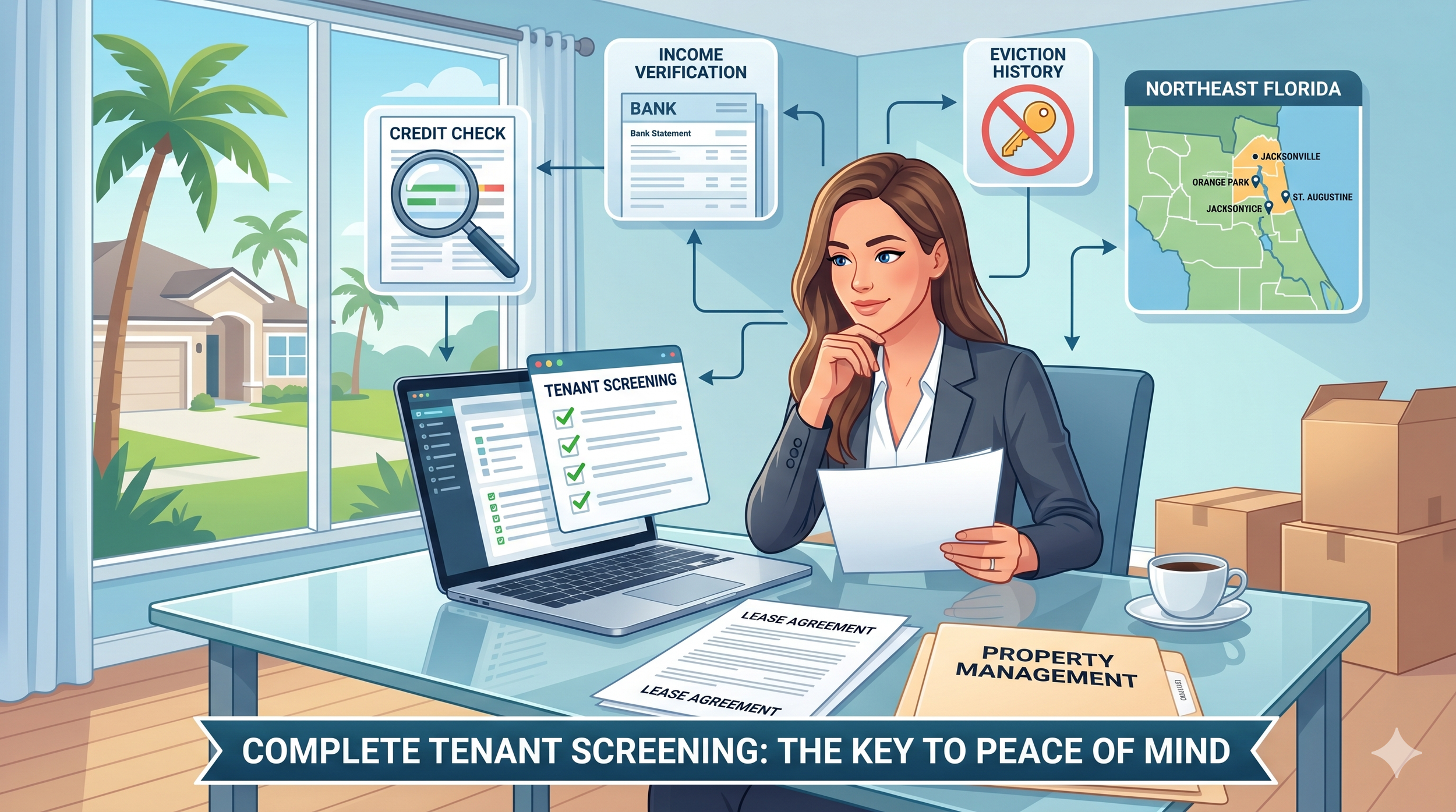
How do you screen tenants in Florida? Proper tenant screening in Florida means verifying credit, income, rental history, and eviction records — consistently, on every applicant — before signing a lease. Done right, it's the single most effective thing a landlord can do to protect their property.
Placing a tenant is one of the most consequential decisions you'll make as a landlord. Get it right and you've got a reliable renter who pays on time, treats the home well, and renews their lease. Get it wrong and you're looking at missed payments, property damage, and an eviction process that can drag on for months in Florida courts.
The good news: tenant screening isn't mysterious. It's a process. And when you follow it consistently, it works.
Why Tenant Screening in Florida Matters More Than You Think
Florida's eviction laws are structured to protect both landlords and tenants — but that structure comes with strict procedural requirements. If a tenancy goes sideways and you need to remove someone, you'll need to have followed every step correctly from the beginning: proper lease terms, proper notices, proper documentation.
The best way to avoid ever needing to use the eviction process? Screen carefully before you hand over the keys.
Landlords in Jacksonville, Orange Park, St. Augustine, and across Northeast Florida deal with a wide range of applicants. Some are excellent. Some have had genuine hardships that don't tell the whole story. And some are experienced at working the system — specifically targeting self-managing landlords who may not have the tools or experience to catch red flags.
What a Thorough Tenant Screening Should Include
Credit History
Pull a full credit report, not just a score. You're looking at payment patterns — are bills consistently paid late? Are there collections? Outstanding judgments? A lower score with a clean payment history often tells a better story than a moderate score with a pattern of late payments.
Set a minimum credit standard and apply it the same way to every applicant.
Income Verification
The general benchmark is gross monthly income of at least three times the monthly rent. But the number alone isn't enough — you need to verify it.
Request two to three months of pay stubs alongside two to three months of bank statements. Then cross-reference them. Deposits showing up in the bank account should reasonably match what the pay stubs claim. Forged pay stubs are more common than most landlords realize, and this cross-check is one of the most reliable ways to catch them.
For self-employed applicants, request tax returns and bank statements in place of pay stubs.
Eviction History
This is non-negotiable. A prior eviction doesn't automatically disqualify an applicant, but it needs to be reviewed and understood. When was it? What was the reason? What's the rental history looked like since then?
Some applicants with prior evictions on record will specifically seek out private, self-managing landlords — particularly in Jacksonville and the surrounding Northeast Florida market — because they know property management companies are more likely to catch it and decline.
Rental History and Landlord References
Contact previous landlords directly — not just the most recent one. Ask straightforward questions: Did they pay on time? Did they give proper notice before moving out? Would you rent to them again?
Be aware that some applicants list friends or family as prior landlords. If the "landlord" reference doesn't match a verifiable address or rental record, dig deeper.
Criminal Background Check
Florida law governs how criminal history can be used in tenant screening decisions. You can set standards, but they need to be applied consistently and can't be used in a way that creates a disparate impact on a protected class. If you're unsure how to apply this correctly, it's one more reason working with a professional property management company is worth considering.
Fair Housing Rules Apply to Every Step
This part is critical. Fair Housing laws — at the federal, state, and local level — require that you apply your screening criteria consistently to every applicant, regardless of race, color, national origin, religion, sex, familial status, disability, or other protected characteristics.
That means your written screening criteria need to exist before you start accepting applications. And every applicant needs to be evaluated against the same standards.
Inconsistent screening — even if unintentional — can create legal exposure. If you're self-managing rental property in Jacksonville, Clay County, or St. Johns County, document your criteria and stick to them.
When the Process Gets Complicated
Even landlords who do everything right sometimes end up with a difficult applicant situation. Maybe the numbers look fine on paper but something feels off. Maybe you're getting pressure to make a quick decision. Maybe you're not sure how to evaluate a non-traditional income source.
This is where professional property management earns its value. At CrossView Property Management, we screen tenants across Duval, Clay, and St. Johns counties every day. We've seen the red flags. We know what forged documents look like. And we evaluate applications without the emotional weight of a face-to-face conversation that can cloud judgment.
We serve landlords in Jacksonville, Orange Park, Fleming Island, Middleburg, Green Cove Springs, St. Augustine, Ponte Vedra Beach, Nocatee, and the surrounding communities — and we're happy to talk through what a professional screening process looks like for your property.
Reach out anytime: CrossView Property Management 📞 904-855-7933 ✉️ rentals@crossviewpm.com www.crossviewpropertymanagement.com
Frequently Asked Questions
Q: What are the legal requirements for screening tenants in Florida? A: Florida doesn't mandate a specific screening process, but landlords must comply with federal and state Fair Housing laws, which require consistent application of screening criteria across all applicants. You can set your own standards for credit, income, and rental history — but they must be documented, applied equally, and not have a discriminatory impact on protected classes.
Q: How do I verify a tenant's income in Florida? A: Request two to three months of pay stubs and cross-reference them with bank statements from the same period. Deposits in the bank account should reasonably align with stated income. For self-employed applicants, use tax returns and bank statements. This cross-check is one of the most effective ways to identify forged income documentation, which is more common than most Florida landlords expect.
Q: Can I reject a tenant in Florida based on eviction history? A: Yes, but the decision needs to be applied consistently across all applicants and documented as part of your written screening criteria. A prior eviction alone doesn't automatically mean rejection — context matters. What you can't do is apply the standard selectively or in a way that discriminates against a protected class.
Q: How does tenant screening in Jacksonville, FL differ from other markets? A: The legal framework is set at the state level, so Florida landlord-tenant law applies across Jacksonville, St. Augustine, Orange Park, and the rest of Northeast Florida. That said, local market conditions — including the volume of renters actively seeking self-managing landlords — make thorough screening especially important in this region. Working with a Jacksonville property management company gives you access to professional-grade screening tools and experience that most private landlords don't have on their own.
Q: Does CrossView Property Management handle tenant screening for Jacksonville landlords? A: Yes. Tenant screening is one of the core services we provide to rental property owners across Duval, Clay, and St. Johns counties. We handle background checks, income verification, eviction history, and rental references — and we apply consistent, Fair Housing-compliant criteria to every application. Call us at 904-855-7933 or email rentals@crossviewpm.com to learn more.