Hurricane Season Prep for Rental Properties in Jacksonville, FL
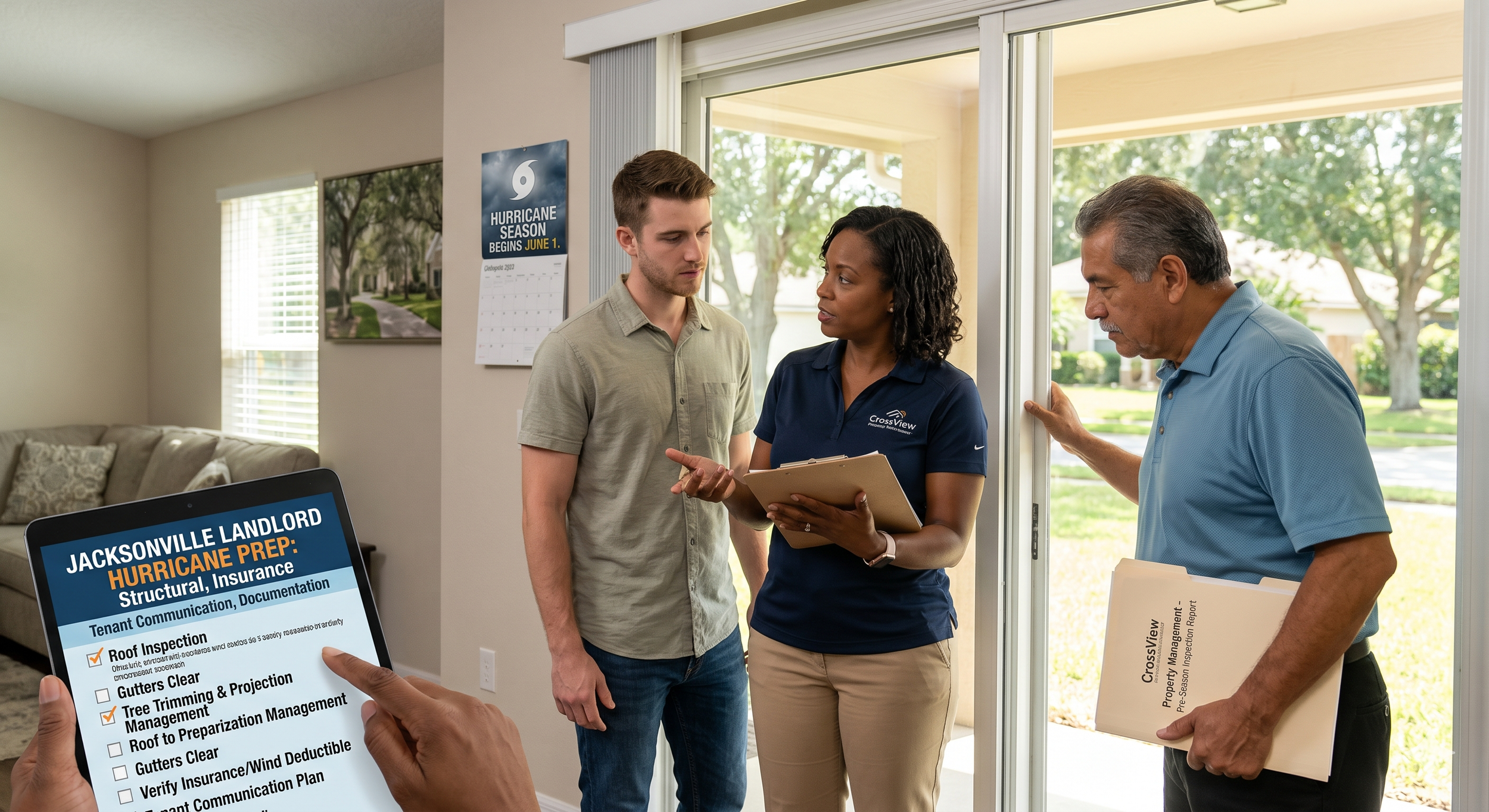
What do Jacksonville landlords need to do to prepare their rental properties for hurricane season? Florida landlords are legally responsible for maintaining habitable conditions — including repairing storm damage — under Florida Statute 83.51. Before hurricane season begins June 1st, rental property owners in Jacksonville and Northeast Florida should address structural vulnerabilities, verify insurance coverage, communicate with tenants, and document property condition. Waiting until a storm is in the forecast is too late.
Hurricane season runs June 1st through November 30th. For most of Northeast Florida, the highest-risk window is August through October — the peak of the Atlantic season — but storms can and do form outside that window. Jacksonville has historically seen less direct impact than South Florida or Tampa Bay, but significant storms have affected the region, and any rental property owner who treats this as someone else's problem is taking a real financial and legal risk.
Here's what needs to happen before storm season arrives, what your legal obligations are during and after a storm, and how professional property management changes the picture when a serious weather event occurs.
Your Legal Obligations as a Florida Landlord
Before getting into the preparation checklist, it's worth being clear about what Florida law requires. Under Florida Statute 83.51, landlords are required to maintain rental properties in habitable condition — which means the property must comply with applicable building, housing, and health codes, and structural elements must be properly maintained.
Hurricane damage to a rental property — roof damage, broken windows, structural compromise — is the landlord's responsibility to repair. Tenants are responsible for their own personal property (furniture, electronics, clothing) and for complying with reasonable lease requirements during an emergency, but the property itself is your obligation.
This isn't just an ethical standard — it has legal teeth. A tenant who notifies you of storm damage and doesn't receive a timely repair response may have remedies under Florida law, including rent abatement if the property is rendered uninhabitable. Getting ahead of this with proactive preparation is far less expensive than dealing with habitability disputes after the fact.
Your lease should also address hurricane-related responsibilities clearly — what tenants are expected to do with outdoor furniture and belongings before a storm, what the process is for maintenance requests after a weather event, and who handles shutter deployment if shutters are part of the property.
Pre-Season Property Preparation
The right time to handle hurricane prep for your rental property is before storm season begins — ideally in April or May, before the wet season arrives, before contractors are slammed with summer workloads, and before a storm is already named and bearing down.
Roof and gutters. Your roof is your first line of defense. Have it inspected before season. Look for missing or loose shingles, deteriorating flashing around vents and chimneys, and any areas showing signs of wear. Clean gutters and downspouts — clogged gutters during heavy rainfall back water up against the roofline and cause interior damage that's entirely preventable.
Windows and doors. If your property has hurricane shutters, verify they're in working condition and that your tenant knows how to deploy them — or that you have a plan for deployment if the tenant isn't able to manage it. If the property doesn't have shutters, evaluate whether impact-resistant glass or shutter installation makes sense as a long-term investment. Sliding glass doors are a specific vulnerability — make sure door tracks are clean and functioning and that the door can be properly secured.
Trees and landscaping. Trees with dead limbs or disease, palms with excessive frond accumulation, and large branches overhanging the structure or fence lines are projectile risks in high winds. Have trees inspected and trimmed before season. This is one of the most overlooked prep items and one of the most common sources of storm damage in Florida.
Exterior items and fencing. Walk the exterior and identify anything that could become a projectile — outdoor furniture, pots, decorative items. Your lease should require tenants to secure or bring in all outdoor items when a storm watch or warning is issued. Fencing in poor condition is another common failure point — assess whether any sections need reinforcement or replacement.
HVAC, electrical, and plumbing. Storm season intersects directly with summer maintenance season in Florida. Service the HVAC before season, check exterior electrical panels for weatherproofing concerns, and ensure any exterior plumbing is properly protected. After a storm, HVAC condensate lines can overflow if drainage is compromised — a small pre-season flush saves a maintenance call.
Insurance: The Piece Most Landlords Handle Wrong
This section matters more than any physical preparation step. If your property sustains significant storm damage and you don't have the right coverage in place, you're absorbing those costs personally.
Verify you have a landlord policy, not a homeowner's policy. A standard homeowner's insurance policy typically doesn't cover a tenant-occupied property. If you converted your residence to a rental and didn't update your insurance, you may have a significant coverage gap. Contact your insurer now to confirm you have a landlord policy — also called a dwelling fire policy — in place.
Understand your wind deductible. Many Florida policies have a separate hurricane or wind deductible — often expressed as a percentage of the insured value rather than a flat dollar amount. A 5% wind deductible on a $400,000 insured property is $20,000 out of pocket before your policy pays anything for wind damage. Know your number before a storm arrives, not after.
Check your flood insurance. Standard landlord policies do not cover flooding. They never have. After major storms, flood damage accounts for some of the largest losses Florida property owners face — and National Flood Insurance Program policies have a 30-day waiting period before coverage becomes active. If your property is in or near a flood zone and you don't have flood coverage, you need to address this before hurricane season, not during it.
Verify loss of rental income coverage. If storm damage renders your property uninhabitable, how long will your insurance replace the lost rent while repairs are being made? Check your policy for loss of rents or loss of rental income coverage and know the limit. A significant repair can take months, and that income gap needs to be covered.
Require tenants to carry renters insurance. CrossView's standard lease requires tenants to maintain renters insurance throughout the tenancy. This protects the tenant's personal property — which your policy doesn't cover — and provides the tenant with liability coverage. It also reduces the likelihood of a claim against your policy for tenant property losses during a storm.
Pre-Storm Communication With Tenants
When a hurricane watch or warning is issued for the Jacksonville area, your tenant needs to know what to do, what's expected of them, and how to reach you. Establishing this communication plan before an actual storm is bearing down prevents confusion and protects you legally.
A proactive landlord communication before hurricane season — a simple letter or email sent annually in late May — should cover where your tenant can find local evacuation zone information and shelter locations, what they're expected to do with outdoor furniture and belongings when a storm threatens, how to submit urgent maintenance requests if storm damage occurs, and a reminder that their personal property is their responsibility and their renters insurance is their protection.
This communication creates a paper trail showing you fulfilled your duty to keep tenants informed. It also reduces the chance of tenant confusion and unnecessary damage from items left outside during a storm.
Post-Storm: Your Responsibilities and Timeline
After a storm passes, your obligations as a landlord kick in immediately. Florida law requires you to maintain habitable conditions — which means storm damage that affects habitability needs to be addressed promptly.
Document the property condition with thorough photos and video as soon as it's safe to access. This documentation is essential for insurance claims and for understanding the scope of what needs to be repaired.
Respond quickly to maintenance requests from tenants. A tenant whose roof is leaking, whose windows are damaged, or who has water intrusion needs a prompt response — not because it's convenient, but because it's legally required and because delay turns manageable damage into extensive damage.
Contact your insurance company to file a claim and initiate the assessment process. Most policies have time-sensitive reporting requirements.
If the property is rendered uninhabitable by storm damage, Florida law governs what happens next — the tenancy may be terminated or rent may be abated depending on the circumstances and what the lease provides.
How Professional Property Management Changes This
Managing hurricane season prep and post-storm response for a rental property from a distance — or alongside a full-time job — adds significant complexity. CrossView Property Management handles seasonal preparation coordination, tenant communications, vendor relationships, post-storm inspections, and maintenance response across properties in Jacksonville, Orange Park, Fleming Island, Middleburg, Green Cove Springs, St. Augustine, Ponte Vedra Beach, St. Johns, and Nocatee.
Our vendor network includes licensed roofers, window and door specialists, tree services, and general contractors across Northeast Florida who we work with year-round. When a post-storm repair is needed, we're coordinating with established vendors, not starting from scratch in a market where every contractor has a full queue.
Hurricane season is a real operational consideration for any rental property owner in Northeast Florida. Getting ahead of it with the right preparation, the right insurance, and the right management team in place is what separates a minor weather event from a significant financial disruption.
CrossView Property Management 📞 904-855-7933 ✉️ rentals@crossviewpm.com www.crossviewpropertymanagement.com
Frequently Asked Questions
Q: What are a Florida landlord's legal obligations during hurricane season? A: Under Florida Statute 83.51, landlords must maintain rental properties in habitable condition and comply with applicable building and housing codes. This includes repairing structural storm damage to the property. Tenants are responsible for their own personal property. A landlord who fails to address habitability issues caused by storm damage in a timely manner may face rent abatement claims or other legal remedies from the tenant.
Q: Does a standard landlord insurance policy cover hurricane damage in Florida? A: Standard landlord policies typically cover wind damage, but many Florida policies have a separate wind or hurricane deductible — often expressed as a percentage of insured value, which can be substantial. Standard policies do not cover flooding — separate flood insurance through the NFIP or a private insurer is required and has a 30-day waiting period before becoming active. Verify your specific coverage, wind deductible, and whether you have loss of rental income coverage before hurricane season begins.
Q: What should I tell my tenants before hurricane season in Jacksonville? A: Send a pre-season communication in late May or early June covering: where to find local evacuation zone information and shelters, what they're expected to do with outdoor furniture and belongings when a storm threatens, how to submit urgent maintenance requests if storm damage occurs, and a reminder that their personal property is their responsibility and should be covered by renters insurance. This communication is good practice and creates a paper trail showing you fulfilled your duty to keep tenants informed.
Q: Who is responsible for hurricane damage to a rental property in Florida? A: The landlord is responsible for structural repairs to the property — roof, windows, walls, and systems. Tenants are responsible for their personal property (furniture, electronics, clothing) and are expected to comply with lease requirements regarding storm preparation. This is why requiring tenants to maintain renters insurance is important — it ensures their belongings are covered and reduces the likelihood of disputes or claims against the landlord's policy.
Q: How does CrossView Property Management handle hurricane season for rental properties? A: CrossView coordinates pre-season preparation, tenant communications, and post-storm inspections and repairs for managed properties across Jacksonville and Northeast Florida. We have established vendor relationships with licensed roofers, window and door specialists, and general contractors who we work with year-round — which means post-storm repair coordination is handled through existing relationships, not cold calls in a saturated market. Call 904-855-7933 or email rentals@crossviewpm.com for more information.