Property Management Agreement in Jacksonville, FL: What to Read Before You Sign
What should you look for in a property management agreement before you sign it?
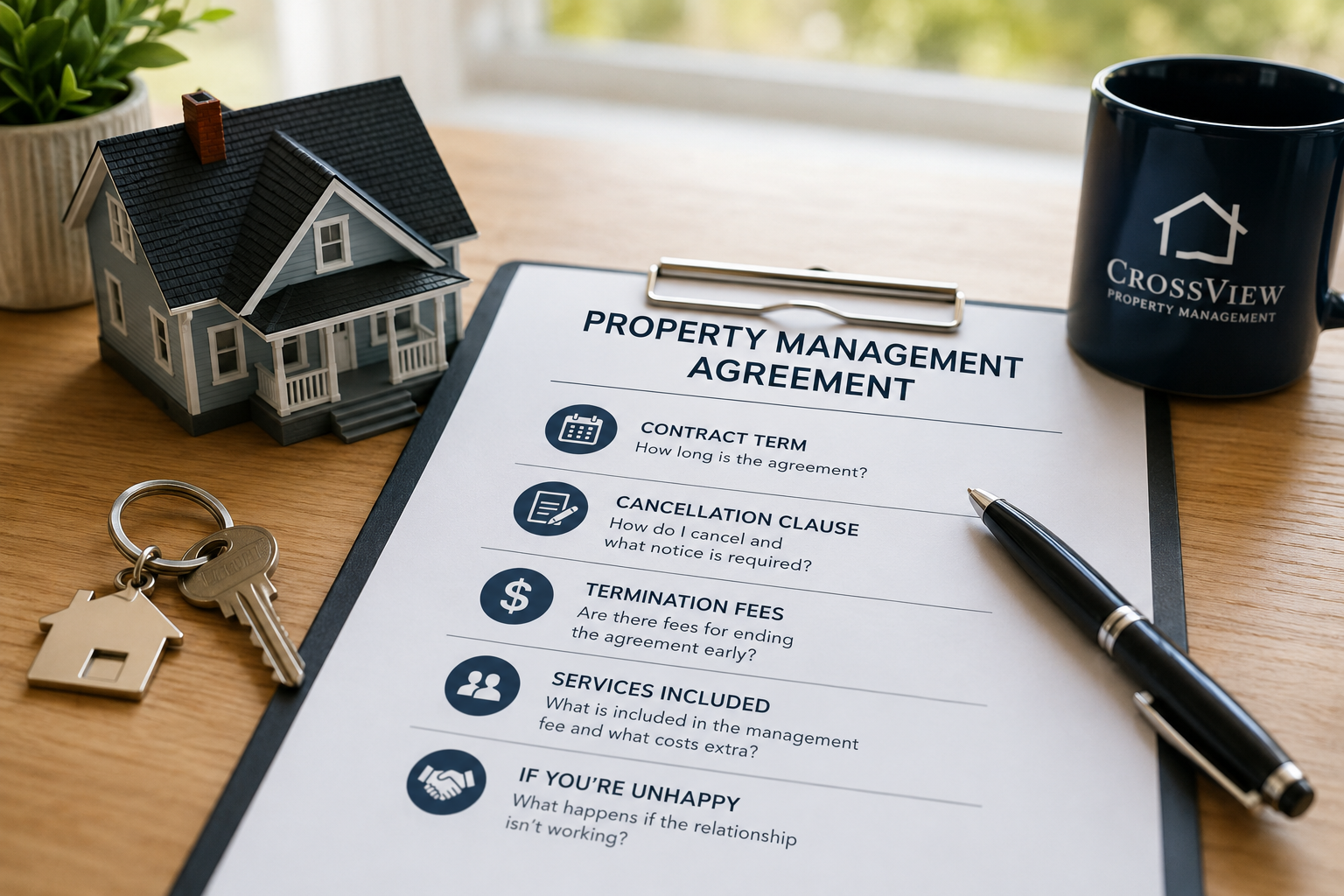
Before signing a property management agreement in Jacksonville, FL, look closely at the contract length, cancellation clause, notice requirements, termination fees, services included, and what happens if you decide the relationship isn't working. The time to understand how an agreement ends is before you sign it—not six months later when you're already frustrated.
Nobody hires a property management company expecting to be unhappy with them.
You hire them because you want things to be easier. You want somebody handling the tenant, the rent, the maintenance, the inspections, and all of the things that come with owning a rental property.
So naturally, most owners spend their time asking what the company is going to do for them.
That's important.
But you also need to ask another question:
What happens if this doesn't work out?
Read the Property Management Agreement Before You Get Comfortable With the Company
This sounds obvious, but it happens all the time.
You have a great conversation with somebody. You like them. They answer your questions. The pricing sounds good.
Then the management agreement shows up, and you sign it.
Maybe you skim it. Maybe you don't.
We've all done this with contracts. Scroll, scroll, scroll, sign.
But your property management agreement in Jacksonville, FL is the document that defines the actual business relationship between you and the company managing your rental.
So read it.
And if you don't understand something, ask.
A good property management company shouldn't have a problem explaining its own agreement to you.
How Long Are You Actually Committing?
One of the first things we would look for is the term of the agreement.
Is it a fixed-term contract?
Does it continue month to month?
Does it automatically renew?
If it renews, when does that happen?
And what do you have to do if you don't want it to renew?
Don't assume you'll simply be able to call one day and say, "Hey, this isn't working for me anymore."
Your agreement should spell out what happens.
A company may have a perfectly reasonable contract term. That's not necessarily a red flag.
The important part is knowing what you're agreeing to before you're locked into something you didn't expect.
Find the Cancellation Clause Before You Sign
This is probably the section most owners don't think about until they need it.
Find it now.
Look for words like termination, cancellation, notice, and early termination.
Then figure out exactly what they mean.
How much notice do you have to give?
Does the notice have to be in writing?
Is there a fee for leaving?
Are you responsible for management fees through the end of a certain period?
Are there other charges that become due when you cancel?
You shouldn't have to be a contract attorney to figure out whether you're allowed to leave.
If the cancellation language feels confusing, ask the company to walk you through it.
And don't just ask, "Can I cancel?"
Ask:
"If I'm unhappy six months from now and want to leave, exactly what happens?"
That's a much better question.
Watch for Early Termination Fees
We've talked before about looking beyond the advertised price when comparing property management fees in Jacksonville.
The same idea applies here.
You may be comfortable with the monthly management fee and leasing fee, but what does it cost to stop using the company?
An early termination charge can make an already frustrating situation even more frustrating.
At CrossView Property Management, cancellation is available without an early termination penalty.
We believe you should stay with your property management company because you trust the company and you're happy with the service—not because the cost of leaving makes you feel stuck.
What Happens to Your Property If You Cancel?
There's another piece owners sometimes overlook.
Even if an agreement lets you cancel, what does the transition look like?
Remember, the management company may be holding or maintaining important information connected to your property.
That can include:
The tenant's lease and application records
Property inspection documentation
Maintenance history
Financial records and statements
Keys and access information
Security deposit information
Current tenant communication
Pending maintenance requests
Outstanding invoices or bills
You want to understand how those things are handled if the management relationship ends.
Because you're not just canceling a subscription.
There's a tenant living in the property. There may be money moving between different parties. There may be an active repair happening.
Things still have to keep moving.
We've written a full guide on switching property management companies in Florida for owners who are already at that point.
But ideally, you understand the transition process long before you ever need that article.
Ask What Happens If You're Unhappy
This may tell you more about a company than you expect.
When you're interviewing a property manager, ask them what happens when an owner isn't happy.
See how they respond.
Do they get defensive?
Do they immediately start talking about the contract?
Or do they talk about communication and trying to solve the problem?
Property management is not going to be perfect all the time.
We say this a lot because it's true.
Something is going to go wrong.
An AC is going to quit in the middle of July. A tenant may get behind on rent. A repair may cost more than anybody wanted it to cost. There may be a misunderstanding.
That's not necessarily what makes a property management company good or bad.
What matters is how they handle it.
Can you have a conversation?
Can you get a straight answer?
Can the company explain what happened and what they're doing next?
That relationship matters.
Our post on how to choose a property management company goes deeper into communication, processes, tenant screening, maintenance, and local experience.
The contract matters.
But so does the company behind the contract.
Don't Read Only the Cancellation Section
While you're there, keep reading.
Your management agreement should help you understand things like what services are included, how maintenance is authorized, what approval limits apply, how fees work, how leasing is handled, and what responsibilities belong to you as the owner.
This is where asking the right questions before hiring someone becomes really important.
We put together 10 smart questions to ask before hiring a property management company, and the management agreement is a good place to verify the answers you were given.
If someone tells you something during the sales conversation and the contract appears to say something different, ask about it.
Don't assume.
Clear it up before you sign.
A Good Agreement Shouldn't Make You Feel Trapped
A management agreement is there for a reason.
It helps define responsibilities, expectations, services, fees, and what both sides have agreed to.
That's a good thing.
But you should understand what you're signing.
You shouldn't find out about a cancellation fee when you're trying to cancel.
You shouldn't discover an automatic renewal after it already happened.
And you shouldn't have to wait until you're unhappy to figure out how the relationship ends.
So before you hire a property management company in Jacksonville, Orange Park, Fleming Island, Middleburg, Green Cove Springs, St. Augustine, Ponte Vedra Beach, St. Johns, Nocatee, or anywhere else in Northeast Florida, take a little extra time with the management agreement.
Read it.
Ask questions.
And make sure you're just as comfortable with how you can leave as you are with how you're getting started.
The Final Takeaway
A property management agreement in Jacksonville, FL shouldn't be something you sign and forget about.
Understand the term. Understand the cancellation clause. Understand the fees. And understand what will happen to your property, your records, and your tenant if you ever decide to make a change.
At CrossView Property Management, we're happy to walk through how we work and answer your questions before you make a decision.
No pressure. Just have the conversation.
Contact CrossView Property Management and let's talk about your rental property.
We'd love to help.
Frequently Asked Questions
Q: What should I look for in a property management agreement in Jacksonville, FL?
A: Start with the contract term, cancellation clause, notice requirements, termination fees, management fees, maintenance authorization, and services included. Make sure what you discussed with the property manager matches what you're being asked to sign.
Q: Can I cancel a property management agreement if I'm unhappy?
A: That depends on the agreement you signed. Look for the termination clause to see what notice is required, whether an early termination fee applies, and what other obligations remain when management ends. At CrossView Property Management, cancellation is available without an early termination penalty.
Q: Should I sign a long-term property management contract?
A: The length alone doesn't tell you whether an agreement is good or bad. What matters is that you understand how long you're committing, whether the agreement automatically renews, and what your options are if the service isn't meeting your expectations.
Q: What happens to my tenant if I change property management companies?
A: The management of the property changes, but the transition also involves transferring important records and information related to the tenancy. Your lease documents, financial records, maintenance history, security deposit information, and other property records may all need to be coordinated between the outgoing manager, owner, and new management company.
Q: What is the biggest red flag in a Jacksonville property management agreement?
A: Anything you can't get a clear answer about. Complicated cancellation terms, unexpected fees, vague responsibilities, or differences between what you were told and what the agreement says deserve another conversation before you sign. A property manager should be willing to explain how the relationship works—including how it ends.