
Short Term vs Long Term Rentals in Florida: What’s the Difference?
Should you rent your property short term or stick with a long-term lease in Florida?
Short-term rentals can generate higher income, but long-term rentals typically offer more stability, fewer headaches, and more predictable returns.
It’s Not Just Lease Length—It’s a Completely Different Model
A lot of owners think the only difference is time.
It’s not.
You’re choosing between two completely different ways of running your property.
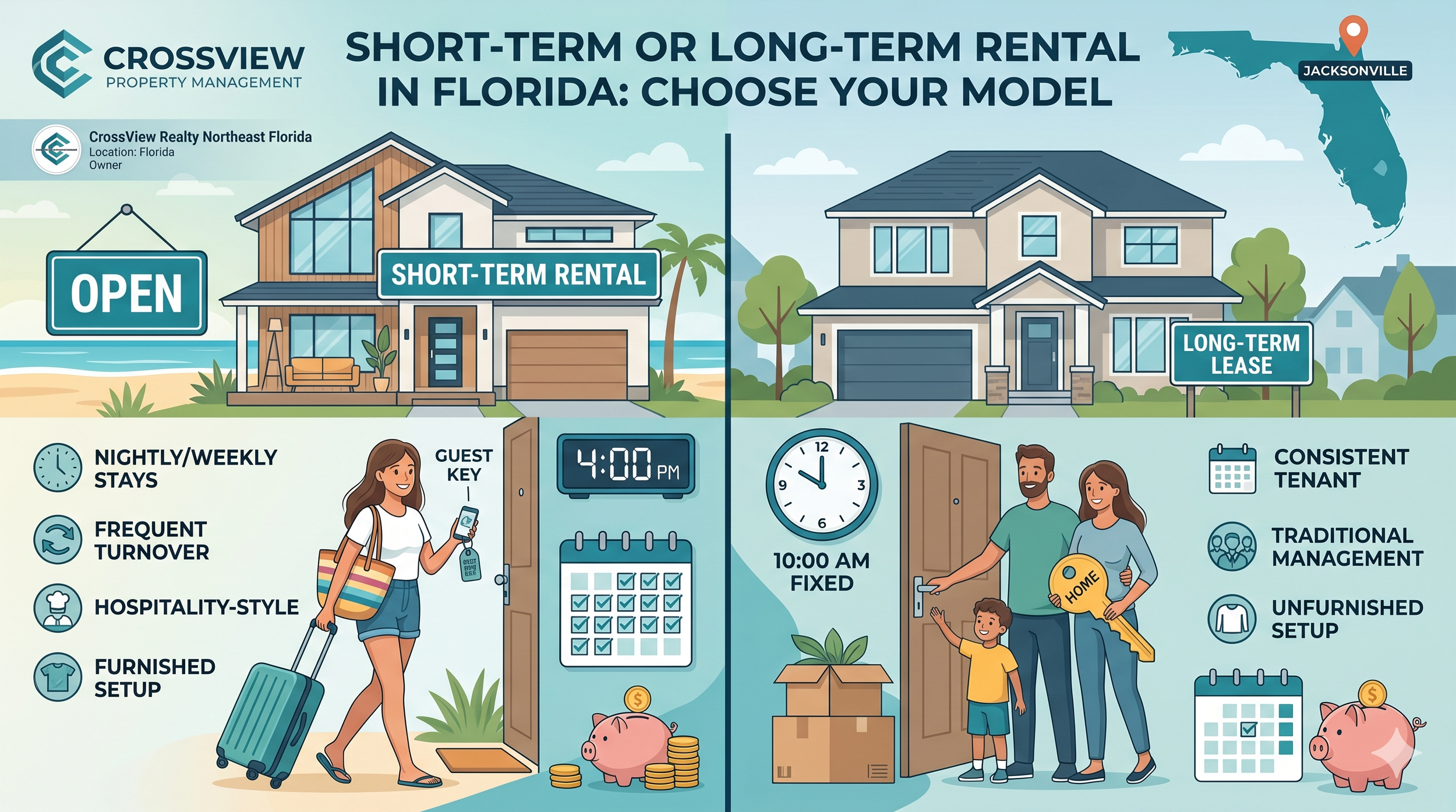
Short-term rentals:
Nightly or weekly stays
Constant turnover
Furnished, guest-ready setup
Hospitality-style management
Long-term rentals:
6–12+ month leases
Consistent tenant
Standard residential setup
Traditional property management
So before you decide, you have to ask:
Do you want a rental property—or do you want to run a hospitality business?
Income: Higher Potential vs Predictability
This is usually what gets people interested in short-term rentals.
Yes, short-term can bring in more money.
But it’s not guaranteed—and it’s not consistent.
Short-term rental income:
Higher nightly rates
Seasonal swings
Income depends on occupancy
Gaps between bookings
Long-term rental income:
Fixed monthly rent
Predictable cash flow
Easier to budget
Fewer income fluctuations
So while short-term might look better on paper…
Long-term is usually more reliable in real life.
Workload: This Is Where Things Change Fast
This is the part that surprises most owners.
Short-term rentals require constant attention:
Cleaning between guests
Messaging and coordination
Handling bookings and cancellations
Ongoing maintenance checks
It doesn’t really stop.
Long-term rentals, on the other hand:
One tenant
Fewer turnovers
Less day-to-day involvement
So the real question becomes:
How involved do you want to be?
Because short-term rentals are hands-on. Every week.
Risk: It Just Shows Up Differently
Both options come with risk—but in different ways.
Short-term rental risks:
Inconsistent income
Property wear and tear from frequent use
Regulatory changes (which happen often in Florida)
More frequent guest issues
Long-term rental risks:
Problem tenants
Longer eviction timelines if things go wrong
Less flexibility to adjust rent mid-lease
Neither is risk-free.
But short-term rentals tend to have more moving parts, which means more chances for things to go sideways.
Furnishing, Setup, and Upfront Costs
Short-term rentals don’t just happen—you have to build them.
That usually means:
Fully furnishing the property
Stocking essentials
Setting up systems for turnover
That’s time and money up front.
Long-term rentals?
Much simpler.
Most are rented unfurnished, and once a tenant is in place, you’re not resetting the property every few days.
What We See Most in Jacksonville
Across Jacksonville and surrounding areas, most owners lean toward long-term rentals for one reason:
Consistency.
Steady income
Lower vacancy (when managed well)
Less operational stress
Short-term rentals can work—but they tend to make the most sense when:
The location strongly supports it
The owner is prepared for active management
The numbers still work after expenses
Otherwise, long-term tends to be the more sustainable route.
So… Which One Is Better?
Here’s the honest answer.
If you want:
Predictable income
Less day-to-day involvement
A more hands-off investment
Long-term rentals are usually the better fit.
If you’re looking for:
Higher potential income
More control over pricing
And you’re okay with the workload
Then short-term could make sense.
But it’s not passive.
Final Thoughts
The difference between short-term and long-term rentals isn’t just how long someone stays.
It’s how your entire property operates.
One is steady and predictable.
The other is flexible but demanding.
If you’re trying to figure out which direction makes the most sense for your property and your goals, we’re always here to help you think it through.
👉 https://www.crossviewpropertymanagement.com/
FAQs
Q: What is the difference between short term and long term rentals in Florida?
A: Short-term rentals involve nightly or weekly stays with frequent turnover, while long-term rentals typically use leases of 6–12 months or more with consistent tenants.
Q: Are short-term rentals more profitable than long-term rentals in Jacksonville?
A: They can be, but income is less predictable and depends on occupancy, seasonality, and expenses. Long-term rentals provide more stable cash flow.
Q: Do short-term rentals require more work?
A: Yes. They involve frequent cleaning, guest communication, and ongoing management compared to long-term rentals.
Q: Are long-term rentals safer for property owners?
A: They’re generally more predictable, but still carry risks like tenant issues. However, they typically involve fewer day-to-day variables.
Q: Can I switch from short-term to long-term rental later?
A: Yes, but it may require changes like removing furnishings, adjusting pricing, and repositioning the property for a different type of tenant.