The Summer Rental Property Maintenance Checklist Every Northeast Florida Landlord Needs
What should Jacksonville FL rental property owners be doing right now to prepare for summer?
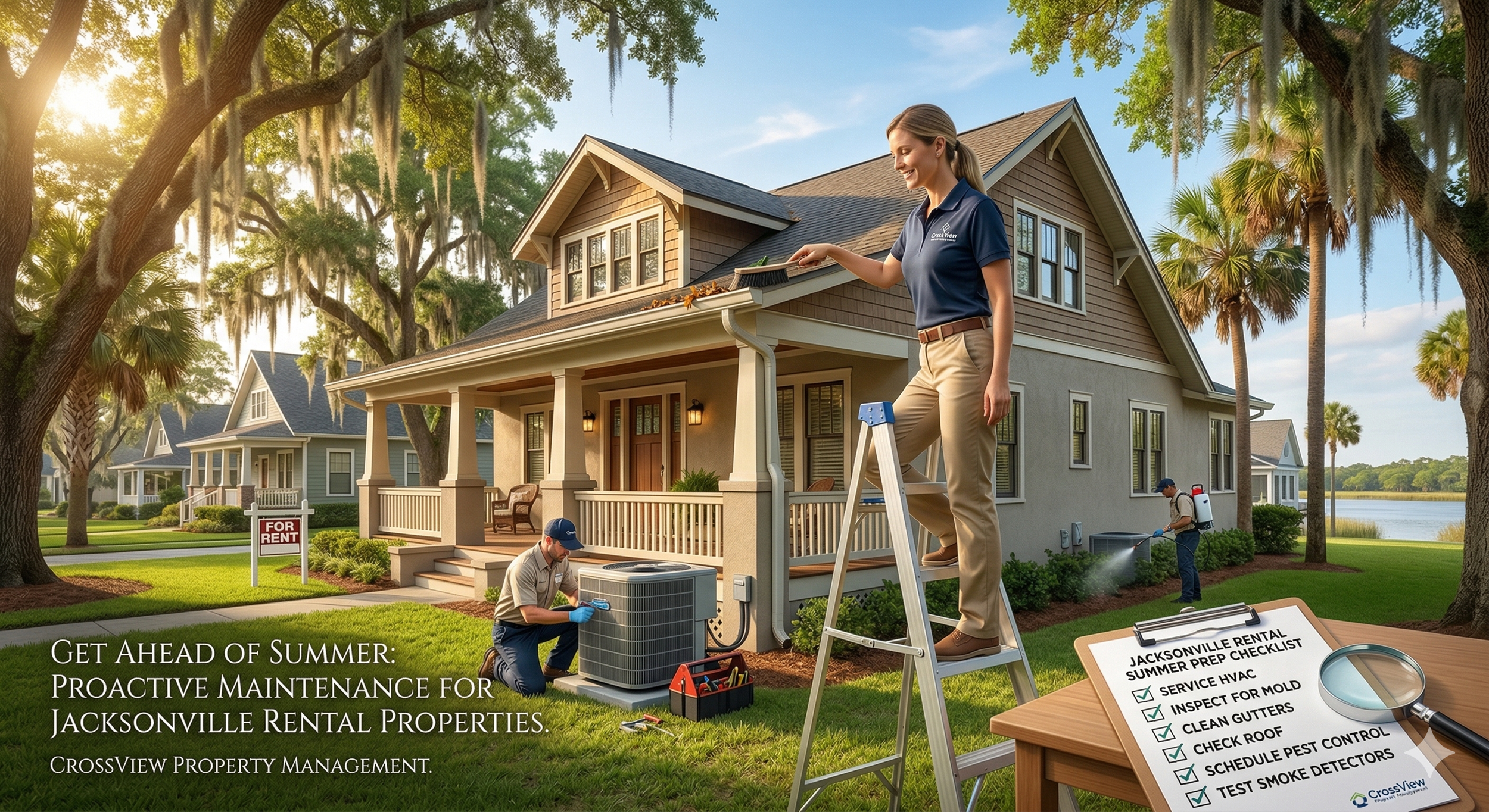
Late April is the window. Hurricane season starts June 1st. The wet season arrives in May. HVAC contractors get slammed by June. The landlords who handle their summer rental property maintenance now — before the heat, the humidity, and the storms arrive — spend the summer fielding far fewer emergency calls than the ones who wait. Here's exactly what to check, and why each item matters specifically for rental properties in Northeast Florida.
1. Service the HVAC — Before Every Contractor in Jacksonville Is Booked
This is the single most time-sensitive item on the list and the one most owners delay too long. Florida AC systems run hard from May through October. A unit that hasn't been serviced going into summer is a unit that will fail at the worst possible moment — during a heat index of 100 degrees, on a Friday afternoon, when your tenant has been without air for six hours and is already texting you.
Schedule HVAC service now: filter replacement, coil cleaning, refrigerant check, and drainage line flush. That condensate drain line is especially important in Northeast Florida — high humidity means it clogs frequently, and a backed-up drain line can overflow into ceilings and walls, creating a mold problem on top of an HVAC problem.
Under Florida Statute § 83.51, landlords are required to maintain rental properties in habitable condition. A non-functioning AC system in a Florida summer is not a minor inconvenience — it's a habitability issue. Get ahead of it in April.
2. Inspect for Mold — Especially Around AC Vents and Bathrooms
Northeast Florida's wet season runs May through October. When outdoor humidity climbs and AC systems work overtime, condensation builds up in attics, around vents, behind walls, and in any space that isn't properly ventilated. Mold can establish itself quickly — and once it's hidden inside walls or ductwork, it's expensive to remediate and a liability risk for property owners.
Walk the property before summer arrives. Look for discoloration around ceiling vents, soft spots near windows, musty odors in closets and laundry rooms, and any signs of moisture in bathrooms and kitchens. Make sure bathroom exhaust fans are functional — they're your first line of defense against humidity buildup in the spaces most prone to mold. If you find anything suspicious, address it now rather than discovering a larger problem mid-summer.
3. Clean Gutters and Check Drainage
Jacksonville and the surrounding communities of Orange Park, Fleming Island, St. Augustine, and Ponte Vedra Beach receive significant rainfall between May and October. Clogged gutters and poor drainage don't just cause cosmetic damage — they direct water toward foundations, create standing water around the property, and increase the risk of water intrusion during the heavy storms that define a Northeast Florida summer.
Clear gutters of debris now. Check that downspouts are directing water away from the foundation. Walk the yard after a rain and look for any areas where water pools near the home. Addressing drainage issues in April costs far less than foundation repairs or flood damage claims in August.
4. Inspect the Roof Before Hurricane Season
June 1st is the official start of Atlantic hurricane season — and Northeast Florida has seen enough named storms to take that date seriously. A roof inspection in late April gives you time to address any issues before the season begins, before roofing contractors are overwhelmed with storm-related work, and before a minor problem becomes a major claim.
Look for missing, cracked, or lifted shingles. Check flashing around chimneys and vents. Look inside the attic for any signs of daylight or existing moisture damage. If your property has an older roof, this inspection also gives you an opportunity to confirm whether your insurance documentation is current — insurers in Florida are increasingly focused on roof age and condition at renewal time.
5. Schedule Pest Control
Summer in Northeast Florida means fire ants, palmetto bugs, mosquitoes, termites, and the full range of subtropical pest activity that comes with heat and humidity. Pests don't just bother tenants — they can damage property, trigger habitability concerns, and create tension in the landlord-tenant relationship that leads to turnover.
A preventative pest treatment in April gets ahead of the summer surge before infestations establish themselves. If your current lease includes a pest control provision, confirm it's being handled. If it doesn't, this is a good time to address that at the next renewal.
6. Test Smoke Detectors and Safety Equipment
Florida law requires working smoke detectors at the start of every tenancy — but a functioning detector at move-in doesn't guarantee it's still working six months later. Late April is a natural opportunity to test smoke detectors, carbon monoxide detectors, and any fire extinguishers on the property. Replace batteries, note any units that need replacing, and document the check.
It takes ten minutes and costs almost nothing. The liability exposure of a non-functioning detector is the opposite of that.
Get Ahead of Summer — It Pays Off All Season Long
The landlords who move through this checklist in April are the ones who spend summer focused on their investments, not reacting to emergency maintenance calls, tenant complaints, or insurance headaches. In a Northeast Florida rental market where well-maintained properties lease faster and retain better tenants, proactive maintenance isn't just good practice — it's a competitive advantage.
At CrossView Property Management, we coordinate seasonal maintenance for rental property owners across Jacksonville, Orange Park, Fleming Island, Middleburg, Green Cove Springs, Ponte Vedra Beach, Nocatee, and throughout St. Johns and Clay counties. We handle the scheduling, the vendor coordination, and the documentation — so nothing falls through the cracks before summer arrives.
If you want your rental property in Northeast Florida heading into summer the right way, reach out to CrossView Property Management today.
Frequently Asked Questions
Q: What is the most important summer maintenance task for a rental property in Jacksonville FL? A: HVAC service is the most time-sensitive item — and the one most owners delay until it's too late. Jacksonville's summer heat and humidity push AC systems hard from May through October. Servicing the unit in April, before contractors are fully booked, means you're not scrambling when a system fails in June. It also addresses the condensate drain line, which clogs frequently in Northeast Florida's humidity and can cause water damage if left unchecked.
Q: When should Northeast Florida landlords do summer rental property maintenance? A: Late April is the right window. It's before the wet season begins in May, before hurricane season starts June 1st, and before HVAC and roofing contractors are at full capacity. Completing your summer maintenance checklist now gives you time to address any issues found without rushing — and without competing for contractor availability with every other owner who waited.
Q: Is a broken AC unit a habitability issue for Florida rental properties? A: Yes. Under Florida Statute § 83.51, landlords are required to maintain rental properties in habitable condition. A non-functioning air conditioning system in Florida's summer heat is widely considered a habitability issue — and tenants have the right to provide written notice and request repairs. Preventative HVAC maintenance in April is the most practical way to avoid this situation entirely.
Q: What summer pests should Jacksonville FL rental property owners watch for? A: Northeast Florida's summer pest pressure includes fire ants, palmetto bugs, mosquitoes, termites, and carpenter ants — all of which are more active in warm, humid conditions. A preventative pest control treatment in late April gets ahead of the summer surge before infestations establish. Termites in particular warrant attention, as Jacksonville's subtropical climate makes it one of the higher-risk areas for termite activity in Florida.
Q: How does summer maintenance protect a Jacksonville rental property owner from liability? A: Florida landlords have a statutory obligation under Chapter 83 to maintain safe and habitable rental properties. Failing to address known maintenance issues — a deteriorating roof, non-functioning smoke detectors, water intrusion, HVAC failure — exposes owners to habitability claims, tenant rent withholding, and potential legal liability. Documented proactive maintenance, completed before problems escalate, is your strongest defense and your best protection.