

Why Taking Move-In Photos Matters for Your Rental Property
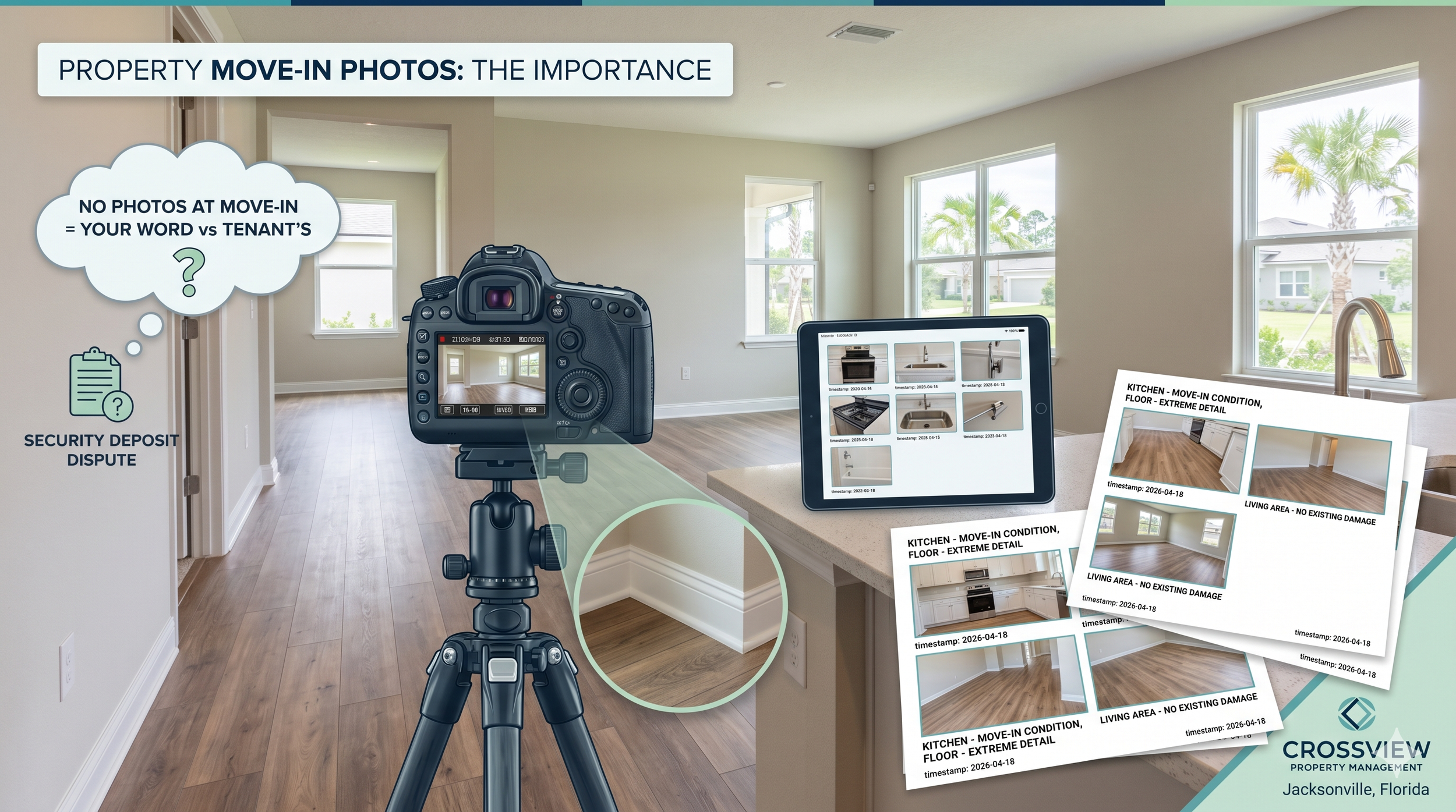
Why is it so important to take photos at move-in for a rental property—and what happens if you don’t?
Because without clear documentation, it becomes your word against the tenant’s—and that’s where owners tend to lose.
This Isn’t Just a Tenant Tip—It Protects You as the Owner
You’ll hear this advice all the time:
“Tenants should take pictures when they move in.”
And that’s true.
But from an owner’s perspective, this matters just as much—if not more.
Because at the end of a lease, everything comes down to one question:
What condition was the property in at the beginning?
If you can’t clearly answer that, things get complicated fast.
Where Things Go Wrong Without Photos
Let’s say a tenant moves out and there’s:
Wall damage
Flooring issues
Stains, wear, or missing items
Now you’re trying to determine:
Was this already there?
Or did it happen during the lease?
Without photos?
You’re guessing.
And if the tenant pushes back—or disputes a security deposit—you don’t have much to stand on.
That can lead to:
Lost deposit claims
Back-and-forth disputes
Delays in re-renting
In some cases, legal escalation
All because there’s no clear starting point.
Photos Create a Clear Before-and-After Story
This is what you actually want.
A simple, well-documented record of:
Move-in condition
Move-out condition
That’s it.
When you have both, everything becomes easier:
Damage is easier to justify
Repairs are easier to explain
Tenants are less likely to argue
Because the evidence is already there.
No gray area.
Jacksonville Rentals: Where This Matters Most
In markets like Jacksonville, where properties turn over regularly, this becomes even more important.
Especially when you’re dealing with:
Multiple tenants over time
Different standards of cleanliness and care
Varying expectations around “normal wear and tear”
Photos help standardize all of that.
They remove the guesswork.
What Happens If You Don’t Take Photos?
Here’s the honest answer.
You’re putting yourself in a weaker position.
Even if you’re right.
Because without documentation:
You may not be able to justify withholding a deposit
Tenants may dispute charges more easily
You may end up absorbing repair costs
And over time, those small losses add up.
It’s not always one big issue—it’s a series of small ones that could have been avoided.
Best Practice: Keep It Simple and Consistent
This doesn’t have to be complicated.
A solid move-in photo process usually includes:
Every room (wide angles + close-ups)
Floors, walls, appliances, fixtures
Any existing damage or wear
Timestamped or stored in an organized file
And just as important:
Doing the same thing at move-out
Consistency is what makes it work.
The Overlooked Benefit: Fewer Disputes
Here’s something we see all the time.
When tenants know there’s clear documentation:
They’re more careful during the lease
They’re less likely to challenge charges
Move-outs go smoother
So it’s not just about protecting yourself after a problem.
It actually helps prevent problems in the first place.
So… Is It Really Necessary?
If you want to avoid:
Deposit disputes
Unclear damage claims
Paying for repairs you shouldn’t
Then yes—it’s one of the simplest things you can do.
And one of the most overlooked.
Final Thoughts
Taking photos at move-in isn’t just a checklist item.
It’s what gives you clarity, protection, and confidence when the lease ends.
Without it, you’re relying on memory and opinions.
With it, you have proof.
If you want help putting systems like this in place—or making sure your rental is protected from day one—we’re always here to help.
👉 https://www.crossviewpropertymanagement.com/
FAQs
Q: Why should landlords take move-in photos of a rental property?
A: Move-in photos document the property’s condition at the start of the lease, helping landlords justify repairs and avoid disputes at move-out.
Q: Can tenants dispute damage without photo evidence in Florida?
A: Yes, and without documentation, it often becomes a “word vs word” situation, which can make it harder for landlords to enforce charges.
Q: What should be included in move-in photos for a rental property?
A: Every room, surfaces, appliances, and any existing damage. Clear, detailed photos provide the best protection.
Q: Do move-in photos help with security deposit disputes?
A: Absolutely. They provide clear proof of condition, making it easier to support deductions if needed.
Q: Should landlords also take move-out photos?
A: Yes. Comparing move-in and move-out photos creates a complete record and removes uncertainty.