

How to Handle Tenant Abandonment in Your Florida Rental Property (2026 Guide)
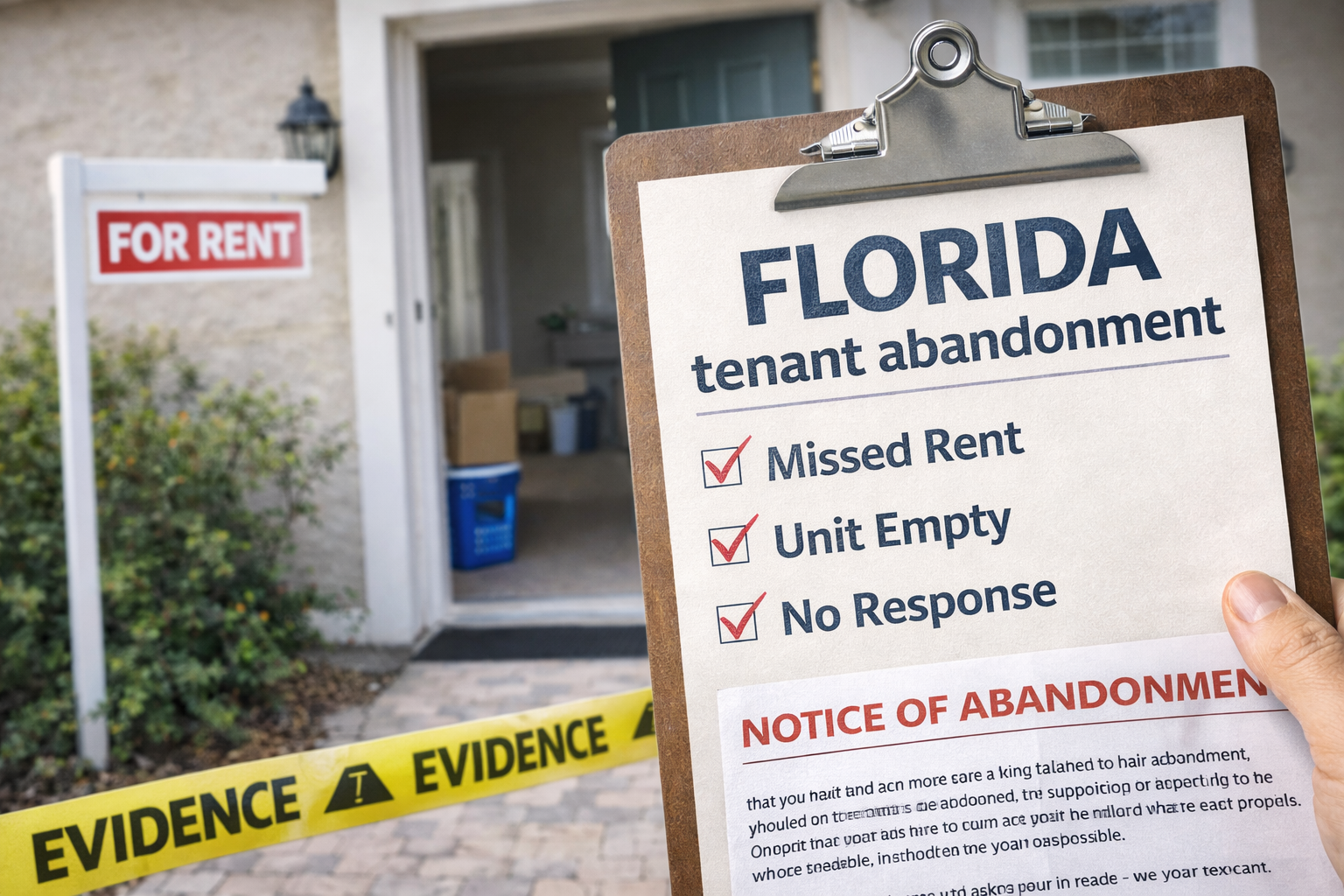
Did your tenant leave without notice — and now you're unsure what to do next?
Tenant abandonment is one of the trickiest and most stressful situations a Florida landlord can face. When a tenant leaves your property suddenly, without communication or rent payment, you're left wondering:
Is it legally considered abandonment?
Can I re-enter the property?
What do I do with their stuff?
How do I protect myself legally?
This blog walks you through the step-by-step process for handling tenant abandonment in Florida, so you can reclaim control of your property without putting yourself at legal risk.
What Counts as Abandonment in Florida?
In Florida, a property is generally considered abandoned when:
The tenant has not paid rent,
They have not been seen or heard from, and
There’s no clear indication that they intend to return.
But it’s not always that simple. Florida law doesn’t define abandonment by guesswork — and just because the property looks empty doesn't mean you're free to enter or re-rent it.
You need evidence.
Signs That a Tenant Has Abandoned the Property
To determine if the unit has truly been abandoned, look for a combination of these:
No rent payment past the due date
No communication or returned calls/texts/emails
Utilities are disconnected
Mail is piling up or forwarding notices are posted
Neighbors report the tenant hasn't been around
Most or all personal belongings are gone
The tenant told someone (verbally or in writing) they were moving
In many leases, abandonment is defined as an absence of a certain number of days (often 15) combined with unpaid rent. Review your lease for any specific terms.
Step-by-Step: What to Do When You Suspect Abandonment
1. Document Everything
Start by gathering evidence. Take time-stamped photos of the unit’s condition and any remaining items. Record the date rent was last paid and any attempts you’ve made to contact the tenant.
2. Review the Lease Agreement
Check whether your lease includes an abandonment clause and what notice periods or actions it allows you to take.
3. Post a Formal Notice of Belief of Abandonment
If you suspect abandonment and rent remains unpaid, issue a written notice to the last known address (and post it on the door). This notice should:
State that you believe the unit has been abandoned
Include a deadline by which the tenant must respond
Explain your next steps if no contact is made
You must give the tenant reasonable time to respond before entering or taking further action.
4. Re-enter Only After Legal Thresholds Are Met
If you receive no response and the conditions meet the legal threshold for abandonment, you may be allowed to retake possession. However, do not enter the unit before you're confident the abandonment qualifies legally. A mistaken re-entry could be seen as unlawful eviction.
What to Do with Personal Property Left Behind
This part is often mishandled — and it can get landlords into trouble.
Even if the tenant leaves trash, furniture, or other items, you cannot simply dispose of them. You must:
Make an inventory of what was left.
Store the property safely for a legally required time period.
Notify the tenant in writing with a deadline to claim their belongings.
Outline where and how they can reclaim items, and what will happen if they don’t.
If the tenant fails to respond or pick up the property by the deadline, you may then dispose of or sell the items. The timeframes and methods vary based on the estimated value of the property.
Can You Immediately Lease the Property Again?
Not yet. You need to:
Ensure the lease is formally terminated, either by abandonment or proper notice
Secure the unit (change locks, inspect for damage)
Handle abandoned property legally
Document everything before re-marketing the unit
Once all steps are complete, and you're legally clear to do so, you can begin the process of preparing and listing the home for rent again.
Final Takeaway: Be Cautious and Compliant
Handling tenant abandonment in Florida takes more than just a gut feeling. Even if it’s clear your tenant is gone, you must follow the proper legal process to avoid claims of unlawful entry, improper notice, or wrongful eviction.
This process can be frustrating, especially if you’re losing rent — but skipping steps could cost you even more.
Want Expert Help Managing a Tenant Abandonment?
If you're dealing with tenant abandonment in Jacksonville, St. Johns County, Clay County, or anywhere in Northeast Florida, CrossView Property Management can help guide you through the process.
Visit our website or contact us today for a no-pressure consultation. We’ll help you handle the situation the right way — protecting both your property and your peace of mind.