Should You Self-Manage Your Rental Property in Florida?
Thinking about managing your own rental instead of hiring a property manager?
You’re not alone. Many property owners in Northeast Florida consider self-managing — and in some situations, it can work well. But it’s important to go in with your eyes open, especially when it comes to tenant law and the real-world risks that come with handling everything yourself.
This isn’t a pitch to convince you not to self-manage — it’s a candid look at what you should know before making that decision.
When Self-Management Can Make Sense
There are absolutely scenarios where managing your own rental property can work:
You live locally and have the time to manage showings, maintenance, and rent collection
You’re comfortable with legal paperwork, leases, and notices
You’re renting to someone you know and trust
You have a smaller property portfolio and want full control
But even in those situations, it’s critical to understand the legal obligations and tenant rights that apply — because the wrong move, even with good intentions, can cost you.
Some Tenants Know the System Better Than Landlords
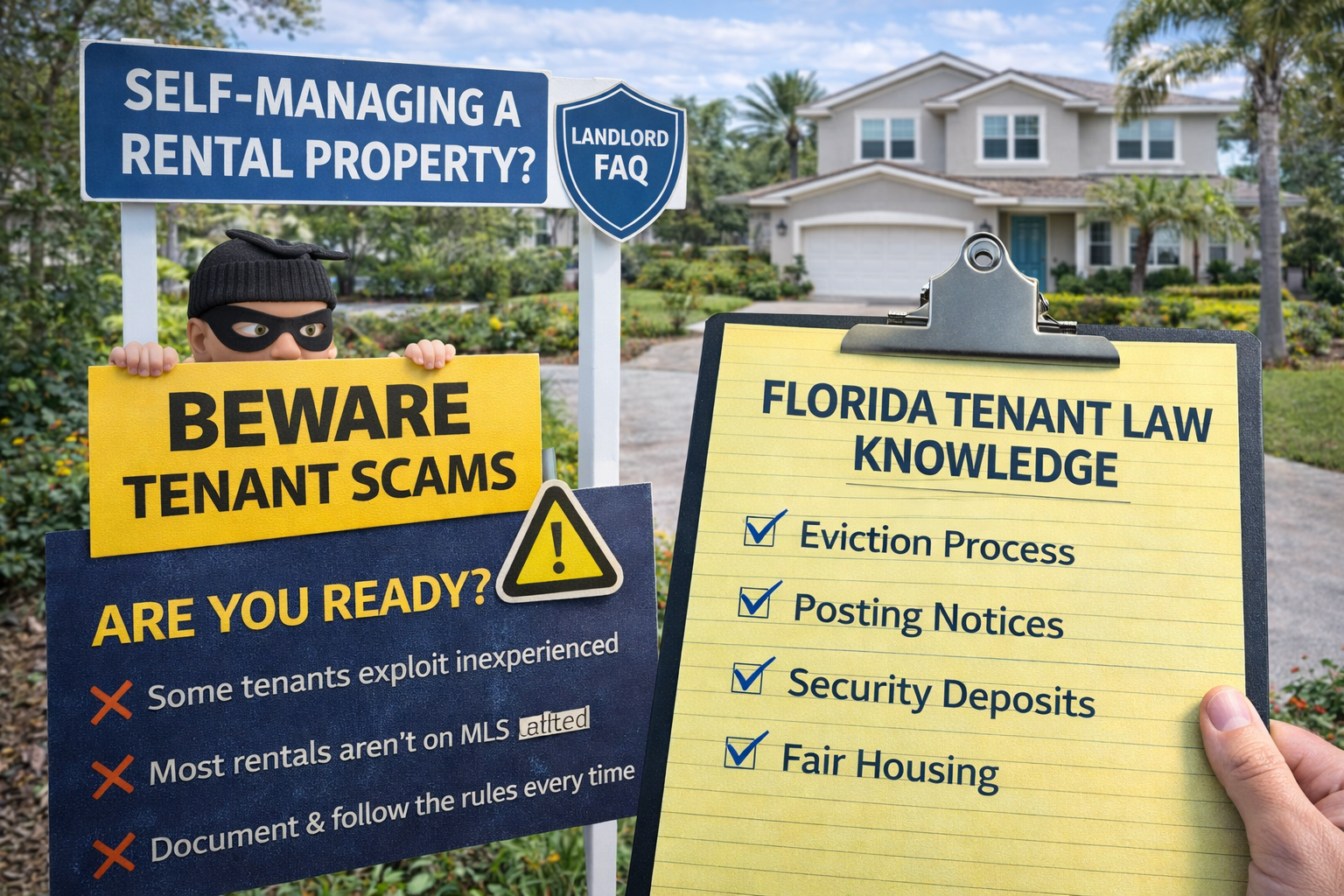
This is where things get real. There are tenants out there who know landlord-tenant law inside and out. These aren’t just savvy renters — they’re people who actively seek out self-managing owners because they know they’re less likely to follow every legal requirement perfectly.
Here’s what that can look like:
Posting the wrong notice or posting it incorrectly
Missing required steps in the eviction process
Failing to document communications or payments properly
Violating Fair Housing rules without realizing it
Not having a legal lease or proper addendums in place
And here’s the truth: If you don’t do it by the book, the system won’t be on your side.
For example, if a tenant stops paying rent and you post a notice that doesn’t follow Florida’s legal format or timing, a judge may require you to start the entire process over — losing weeks (or months) of time and rent in the process.
Why Some Tenants Seek Out Self-Managing Owners
While most renters are honest and cooperative, there’s a subset who intentionally avoid professionally managed homes. Why?
Because they know:
A self-managing owner is more likely to skip background checks
Legal notices may not be delivered or documented correctly
Communication may not be formalized or tracked
There’s less consistency in handling issues or enforcing lease terms
It’s not about fearmongering — it’s about being informed. You don’t have to assume the worst in people, but you do need to protect yourself by knowing the rules and applying them consistently.
The Middle Ground: Know What You’re Getting Into
If you’re going to self-manage, here are a few things you should absolutely be prepared for:
Learn Florida landlord-tenant law (and stay updated)
Use a legally compliant lease and make sure your notices are correct
Screen tenants thoroughly — every time
Document all communication and payments
Follow proper timelines for late rent, notices, and lease enforcement
Keep good maintenance records and handle repairs promptly
The best self-managing landlords treat their rental like a business — with systems, policies, and documentation in place. If you’re organized, diligent, and committed to staying informed, self-management can work.
Want a Backup Plan or Just Need Some Advice?
If you’re thinking about managing your own property in Jacksonville, St. Johns, Clay, or anywhere in Northeast Florida, and you’d like to talk through the pros and cons, we’re happy to help.
At CrossView Property Management, we’re not here to pressure you into hiring us. But if you decide self-management isn’t for you — or just want support down the line — we’re here when you need us.
Visit our website or give us a call for a no-pressure conversation. Let’s help you make the best decision for your rental property and peace of mind.