
The Essential Role of Property Walkthroughs: Why They Matter for Your Investment
Are property walkthroughs really necessary — or just another checkbox?
If you own rental real estate, regular property walkthroughs are one of the most important tools you have to protect your investment, preserve property condition, and minimize costly surprises.
Whether you’re self‑managing or working with a professional property manager in Northeast Florida, understanding why walkthroughs matter — and how they’re done right — can make a big difference in your rental performance.
What Is a Property Walkthrough?
A property walkthrough is a detailed visual inspection of a rental home — typically conducted:
Before a tenant moves in (move‑in inspection)
Periodically during a tenancy (interim or routine walkthroughs)
After a tenant moves out (move‑out inspection)
Walkthroughs allow you to evaluate property condition, document issues, and compare property status over time.
This isn’t a casual look around — it’s a methodical documentation of every part of the home that could influence maintenance, safety, and value.
Why Walkthroughs Are So Important
🛠 1. Prevent Small Problems from Becoming Big Ones
A small leak behind a dishwasher or minor floor damage that goes unnoticed can become expensive if left unmanaged. Walkthroughs help catch issues early — before they escalate.
📷 2. Document Condition for Legal Protection
When done properly, walkthroughs include photo and video documentation that:
Supports security deposit decisions
Reduces disputes with tenants
Provides legal evidence if needed in court
Good documentation isn’t optional — it’s your best defense in disagreements over property condition.
📈 3. Track Wear and Tear vs. Damage
Normal wear and tear happens. But discerning it from tenant‑caused damage requires experience and clear records. Regular inspections help identify when wear is truly normal and when action is needed.
💬 4. Maintain Tenant Relationships
Walkthroughs also provide valuable communication touchpoints with tenants. When occupants see a proactive approach to maintenance and care, they tend to treat the property with more respect.
Different Types of Property Walkthroughs
🔍 Move‑In Walkthrough
Before a tenant occupies the home:
Document every room, surface, and fixture
Take timestamped photos
Provide a walkthrough report to the tenant
This sets clear expectations for what condition the home was in at the start.
🗓 Routine Walkthroughs
These can be scheduled:
Mid‑lease
Quarterly
Bi‑annually
Routine walkthroughs help catch issues early and reinforce the importance of property care.
🚪 Move‑Out Walkthrough
After the tenant leaves:
Compare current condition to move‑in documentation
Note repairs beyond normal wear and tear
Determine appropriate security deposit deductions
The move‑out inspection is essential before re‑renting or marketing the property again.
What Walkthroughs Should Include
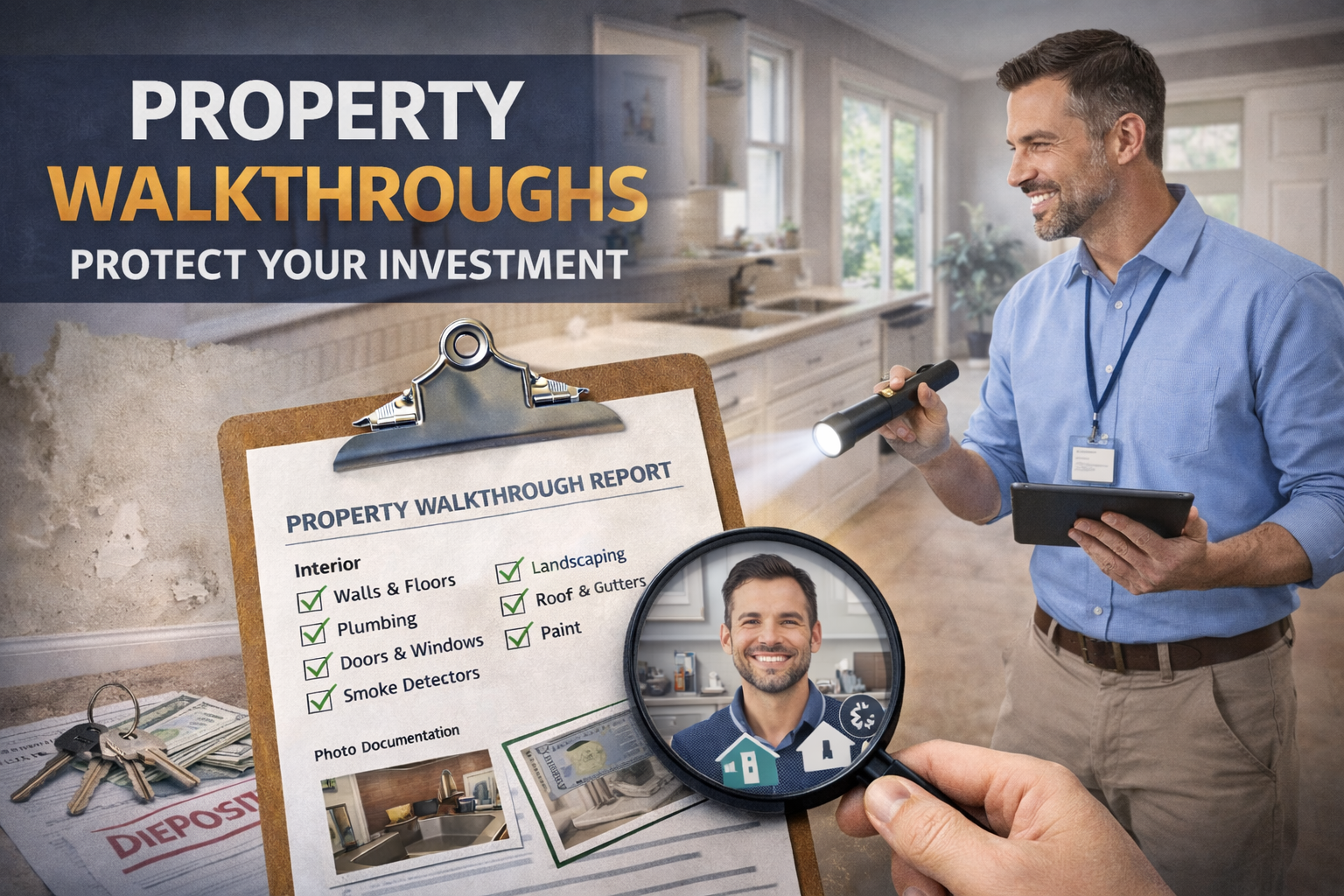
A thorough property walkthrough should cover:
Interior Areas
Walls, floors, ceilings
Appliances and systems (HVAC, plumbing, electrical)
Doors, windows, locks
Safety devices (smoke detectors, carbon monoxide alarms)
Exterior Areas
Roof and gutters
Landscaping and irrigation
Driveways, walkways, patios
Siding, paint, and structural components
Documentation
Photos and videos with dates
Clear notes on condition
Checklists tied to lease language
Why Owners Benefit From Professional Walkthroughs
Even if you self‑manage, there’s real value in professional walkthroughs because:
Experienced managers know what to look for
They know how to document legally defensible evidence
They catch issues owners may overlook
They can help prioritize repairs based on long‑term cost savings
In other words: walkthroughs don’t just check boxes — they protect your investment.
Common Misconceptions About Walkthroughs
❌ “Walkthroughs are just for move‑outs.”
Walkthroughs should occur throughout the lease, not just at the end.
❌ “I can just eyeball the property.”
Casual looks aren’t enough — thorough, methodical documentation matters.
❌ “Photos are optional.”
Without photos/videos, walkthrough records lose credibility and legal strength.
Walkthroughs and Tenant Cooperation
Walkthroughs should be respectful and compliant with law. In most jurisdictions, including Florida, landlords must provide notice before entering the property for inspections unless otherwise specified in the lease.
Clear communication about timing and purpose improves tenant cooperation and reduces tension.
Final Thought: Walkthroughs Protect Long-Term Value
Regular, documented property walkthroughs are more than management tasks — they’re strategic safeguards.
Walkthroughs help you:
Maintain property condition
Reduce costly repairs
Resolve disputes more effectively
Prepare the home for long‑term success
Want Help With Professional Property Walkthroughs?
At CrossView Property Management, we conduct detailed, documented walkthroughs that protect your property and give you peace of mind.
Whether you own in Jacksonville, St. Johns, St. Augustine, Clay, or Duval County, we’d be happy to talk about how smart walkthrough practices fit into your overall management strategy.
Visit our website or contact us today for a no‑pressure consultation.