

Florida Eviction Process & Timeline: What Jacksonville Landlords Should Expect
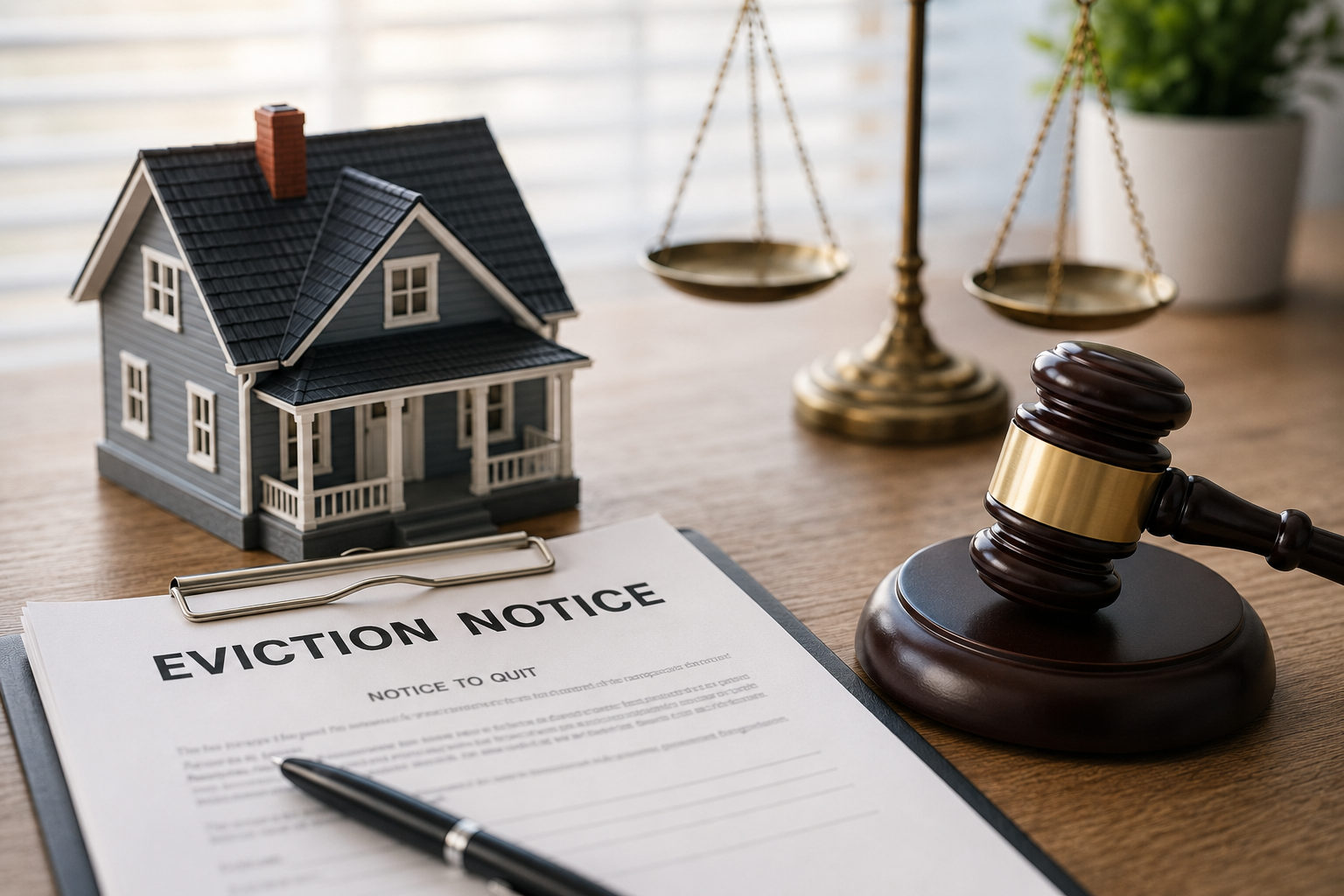
How does the eviction process work in Florida, and how long does it take?
The Florida eviction process generally starts with the proper written notice, followed by a county court filing if the tenant does not comply. For nonpayment of rent, that usually begins with a 3-day notice. From there, the timeline depends on service, whether the tenant responds, whether the case is contested, the court's schedule, and how quickly each step is handled.
And this is where a lot of rental property owners get nervous.
It's one thing to collect rent and coordinate a repair.
It's another thing entirely when the rent stops coming in and you're staring at a tenant who isn't leaving.
So let's walk through what actually happens.
This article provides general information about Florida residential evictions. Every situation is different, and rental property owners should seek qualified legal advice when dealing with a specific eviction.
Florida Eviction Process and Timeline at a Glance
For a typical nonpayment of rent situation, the process looks something like this:
| Step | What Happens | General Timing |
|---|---|---|
| Rent is not paid | Tenant is in default under the lease | Depends on lease due date and terms |
| 3-Day Notice | Written demand for rent or possession | 3 days, excluding Saturdays, Sundays, and court-observed legal holidays |
| Eviction complaint | If the tenant doesn't pay or leave, an eviction can be filed in county court | After the notice period expires |
| Tenant is served | Summons and complaint are delivered through legal process | Timing varies |
| Tenant response period | Tenant generally has 5 days after service to respond in the eviction action | Court timeline applies |
| Default or hearing | An uncontested case may move toward default; a contested case can require further court proceedings | Varies significantly |
| Judgment for possession | Court determines the landlord is entitled to possession | Depends on case |
| Writ of Possession | Sheriff posts notice at the property | 24-hour notice |
| Possession returned | Sheriff can restore possession to the landlord | After writ process |
That table looks pretty straightforward.
Real life isn't always that neat.
A tenant may leave after receiving the first notice.
They may pay.
They may respond to the eviction.
They may raise a defense.
Service may take longer than expected.
A notice may have been prepared incorrectly and need to be corrected.
The court calendar may add time.
So when someone tells you, "An eviction in Florida takes exactly X number of days," be careful with that answer.
There are required steps.
There is not one guaranteed timeline.
Step 1: The Right Notice Has to Come First
For many Jacksonville landlords, eviction starts because the tenant hasn't paid the rent.
Florida law generally requires a 3-day written notice demanding payment of the rent or possession of the property before the landlord can terminate the rental agreement for nonpayment.
And those aren't just any three calendar days.
Saturdays, Sundays, and court-observed legal holidays are excluded.
Sounds simple enough.
But the notice itself matters.
The amount has to be right. The dates have to be right. The property information has to be right. And it has to be delivered in a legally acceptable way.
This is where doing something "close enough" can become a problem.
Property management is full of situations where close enough might work.
Eviction isn't one of them.
What If the Problem Isn't Unpaid Rent?
Not every eviction starts because the tenant stopped paying.
Maybe there is an unauthorized pet.
Maybe there are unauthorized occupants.
Maybe the tenant repeatedly violates parking or community rules.
Maybe there is serious property damage.
Florida treats different lease violations differently.
Some violations give the tenant an opportunity to correct the problem. For those situations, a landlord generally uses a 7-day notice to cure.
Other violations may be serious enough—or repeated after prior written warning—that the tenancy can be terminated without another opportunity to correct the behavior. Those situations also have specific notice requirements.
This is why we don't recommend grabbing a random eviction notice from the internet and hoping it's the right one.
The reason for the eviction matters.
So does the notice.
Step 2: If the Tenant Doesn't Comply, the Case Goes to Court
If the required notice period expires and the tenant has not paid, corrected the violation, or moved out as required, the next step is generally filing an eviction complaint.
In Florida, an action for possession is filed in the county court where the rental property is located.
So if your rental is in Jacksonville, that generally means Duval County. Properties in Orange Park or Fleming Island may fall in Clay County, while properties in St. Augustine, Ponte Vedra Beach, St. Johns, or Nocatee may be in St. Johns County depending on the property's location.
Once the case is filed, the tenant must be served.
And now you're officially in the court process.
Step 3: The Tenant Has an Opportunity to Respond
After service, the eviction moves into a short-response court process.
The tenant generally has five days after service to file an answer in the possession case.
For many nonpayment cases, Florida law also has an important rent-registry requirement. If a tenant wants to raise certain defenses other than payment, the tenant generally must deposit the accrued rent claimed into the court registry or file a motion asking the court to determine the proper amount.
That deadline matters.
But here's what matters to you as the owner:
A tenant response can change the timeline.
If the tenant doesn't respond and doesn't meet the required court obligations, the landlord may be able to seek a default.
If the tenant contests the eviction, the case can require additional court action or a hearing.
And that's where an eviction that looked simple at the beginning can start taking longer.
How Long Does an Eviction Take in Florida?
This is usually the question the owner really wants answered.
And we understand why.
Every day the tenant remains in the property without paying rent can mean more lost income.
But there isn't one honest answer that applies to every Florida eviction.
An uncontested eviction where the notice is correct, service happens quickly, and the tenant doesn't fight the case can move much faster than a contested eviction.
A case can take longer if:
- The tenant is difficult to serve
- The original notice has a problem
- The tenant files an answer or defense
- The rent amount is disputed
- A hearing is required
- Court scheduling creates delays
- The tenant makes a payment that changes the situation
This is one reason proper documentation from the very beginning matters so much.
You don't want to get several steps into an eviction and discover that the first step wasn't handled correctly.
Be Very Careful About Accepting Partial Rent
Here's one that can catch self-managing landlords off guard.
The tenant owes you money.
They offer you part of it.
Your first thought may be, "Well, something is better than nothing."
Maybe.
But once an eviction notice has been served, accepting partial rent can affect what has to happen next under Florida law.
There are specific procedures for handling partial payment after a nonpayment notice.
So don't improvise.
Before taking money in the middle of an eviction process, make sure you understand what accepting that payment does to the notice and the case.
Step 4: The Court Awards Possession
If the landlord prevails, the court can enter judgment giving possession of the rental property back to the landlord.
But even then, you don't just drive over and change the locks.
There is still another step.
The clerk issues a Writ of Possession, and the sheriff posts a 24-hour notice at the property.
The sheriff—not the landlord—handles the legal restoration of possession.
That distinction matters.
Don't Change the Locks Yourself
We understand the frustration.
Your tenant hasn't paid.
Maybe they haven't communicated.
Maybe you know they're still living there.
And you're thinking, "It's my house. Why can't I just change the locks?"
Because Florida law doesn't allow a landlord to remove a residential tenant that way.
You can't shut off utilities to force the tenant out.
You can't simply lock them out.
You can't skip the legal process because the tenant owes you money.
That's often called a self-help eviction, and it can create a much bigger problem for the landlord.
Do it the right way.
Even when the right way feels slower.
The Best Eviction Is the One You Never Have to File
We handle evictions when they're necessary.
But our preference?
Avoid getting there in the first place whenever possible.
And that starts long before rent is late.
It starts with screening.
At CrossView Property Management, tenant screening includes credit, background, income, rental history, previous landlord references, and eviction history.
We've written a full guide on how to screen tenants in Florida, because good screening is one of the strongest tools you have for reducing the chance of a bad tenancy.
Does great screening guarantee you'll never have an eviction?
No.
Life happens. Employment changes. Relationships change. Financial situations change.
There are no guarantees in property management.
But good screening gives you a much better place to start.
What Does a Property Manager Do During an Eviction?
This is where professional management becomes especially valuable.
At CrossView Property Management, lease enforcement doesn't begin the day we decide an eviction is necessary.
It starts with consistent rent collection, documentation, communication, and enforcement of the lease.
If the situation reaches the point where legal action is necessary, we help coordinate compliant notices, legal counsel, court filings, and the process of getting the property back under control.
We explain more about our role in How a Property Manager Handles the Eviction Process in Jacksonville, FL.
For owners who are already self-managing and have a tenant who isn't paying, we also offer Homeowner Rescue.
That's for the owner who is already in it.
The tenant isn't paying. You're not sure what notice should have been sent. You're worried you may have handled something incorrectly. And you're ready for somebody else to help take the wheel.
We've seen those situations.
They can get overwhelming pretty quickly.
The Final Takeaway
The Florida eviction process and timeline isn't complicated because there are dozens of steps.
It's complicated because the steps that do exist have to be handled correctly.
Proper notice. Proper timing. Proper documentation. Proper court procedure.
And no shortcuts.
If you own a rental property in Jacksonville, Orange Park, Fleming Island, Middleburg, Green Cove Springs, St. Augustine, Ponte Vedra Beach, St. Johns, Nocatee, or elsewhere in Northeast Florida, CrossView Property Management can help you manage the tenant relationship long before it reaches an eviction—and coordinate the process when legal action becomes necessary.
Reach out to CrossView Property Management and let's talk about what's going on with your rental.
We'd love to help.
Frequently Asked Questions
How long does the eviction process take in Florida?
There is no guaranteed number of days for a Florida eviction. A straightforward, uncontested case can move much faster than one involving service delays, tenant defenses, disputed rent, defective notices, or court hearings. The important thing is to follow each required step correctly rather than trying to rush the process.
How many days' notice do you give a tenant for unpaid rent in Florida?
For nonpayment of rent, Florida generally requires a 3-day written notice demanding payment or possession before the landlord can terminate the rental agreement. Saturdays, Sundays, and court-observed legal holidays are excluded when counting those three days.
Can a Jacksonville landlord change the locks on a tenant who isn't paying?
No. A residential landlord cannot simply lock a tenant out or shut off utilities to force the tenant to leave. If the tenant doesn't voluntarily surrender the property, possession generally has to be restored through the legal eviction process.
What happens after a landlord wins an eviction in Florida?
After judgment for possession is entered, the clerk can issue a Writ of Possession to the sheriff. The sheriff posts a 24-hour notice at the property and can then restore possession to the landlord.
Does CrossView Property Management handle evictions in Jacksonville, FL?
CrossView handles lease enforcement and coordinates the eviction process when legal action becomes necessary, including compliant notices and coordination with attorneys and court filings as needed. We also offer Homeowner Rescue for property owners who are already dealing with a nonpaying or difficult tenant and need help getting the situation back under control.