DP-3 vs. HO-3 for Rental Property: What Florida Landlords Need to Know
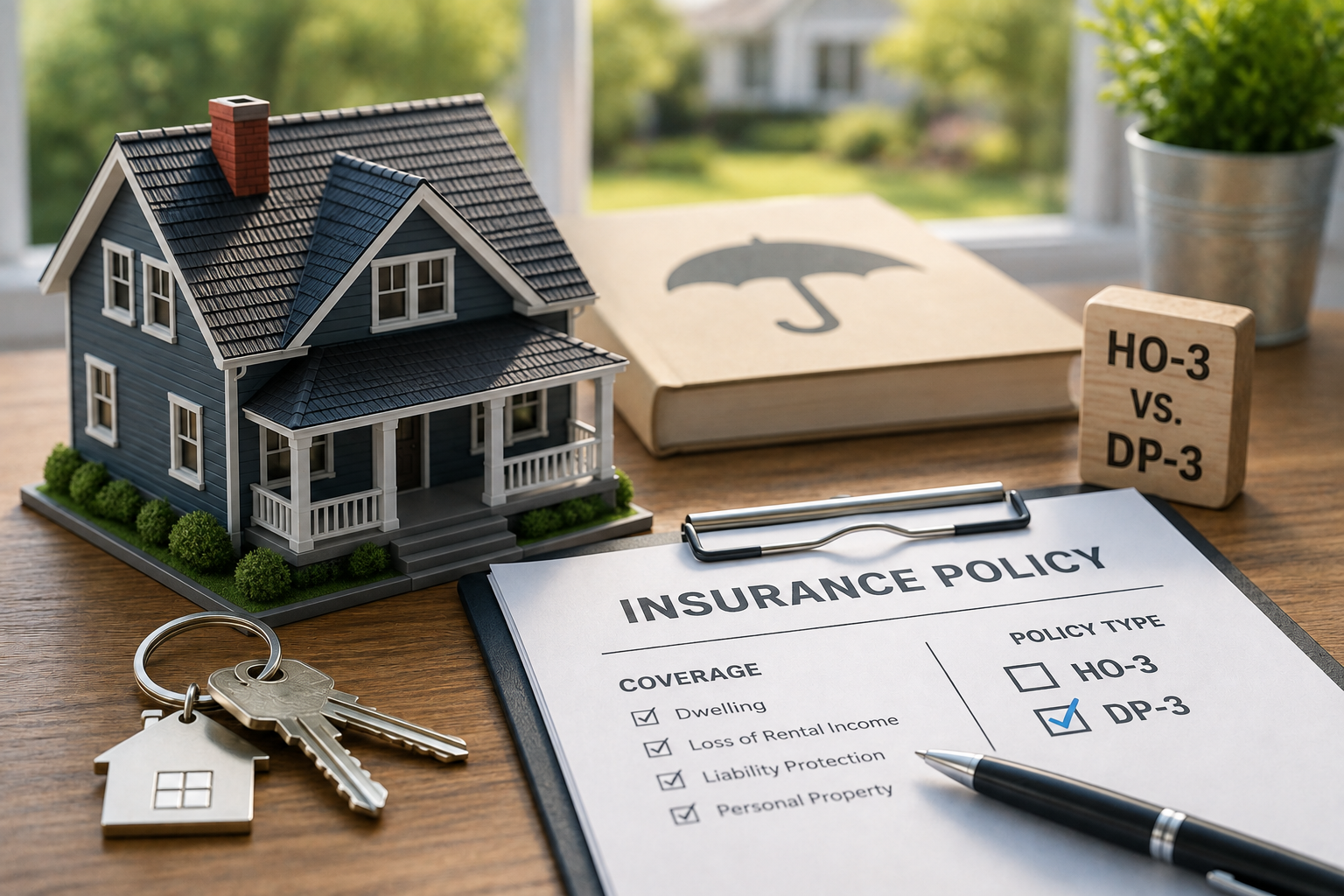
Do you need a DP-3 or HO-3 insurance policy when you turn your Florida home into a rental property?
An HO-3 is generally designed for an owner-occupied home, while a DP-3 is a dwelling policy commonly used for tenant-occupied rental properties. If you've moved out of your Jacksonville-area home and turned it into a rental, don't assume the homeowners policy you already have is still the right coverage—talk to your insurance agent about the change in occupancy before the tenant moves in.
This is one of those things that is really easy to overlook.
You lived in the house.
You had homeowners insurance.
Now you're moving, but instead of selling the property, you've decided to rent it.
Same house. Same roof. Same mortgage.
So why wouldn't you just keep the same insurance?
Because one very important thing changed.
You don't live there anymore.
And from an insurance standpoint, that matters.
DP-3 vs. HO-3 for Rental Property: What's the Difference?
Here's the simple version:
| HO-3 | DP-3 | |
|---|---|---|
| Generally designed for | Owner-occupied homes | Tenant-occupied or non-owner-occupied dwellings |
| Who lives there? | You, the homeowner | Your tenant |
| Dwelling coverage | Broad coverage, subject to exclusions and policy terms | Often broad dwelling coverage, subject to exclusions and policy terms |
| Owner's belongings | Designed to cover the homeowner's personal property | Usually focused more on the building and landlord-owned property |
| Loss of use/income | Often focused on additional living expenses for the homeowner | May include fair rental value or loss-of-rent coverage after a covered loss |
| Liability | Homeowner personal liability is commonly part of the policy | Landlord liability needs to be specifically reviewed |
| Best question to ask | “Does this policy still cover the home if I rent it out?” | “Does this policy cover the way I'm actually using this rental?” |
Now remember: insurance companies don't all write policies exactly the same way.
A DP-3 from one carrier may not have identical limits, endorsements, deductibles, or exclusions as a DP-3 from another carrier.
Same with an HO-3.
So don't buy insurance based only on the letters and numbers.
Read the coverage.
Or, better yet, sit down with an insurance professional and have them explain it to you.
What Is an HO-3 Policy?
An HO-3 is one of the most common types of homeowners insurance for an owner-occupied single-family home.
If you bought a house in Jacksonville, Orange Park, Fleming Island, St. Johns, or somewhere else in Northeast Florida and you actually live in that house, there's a good chance you've heard the term HO-3.
It generally provides broad coverage for the dwelling itself, along with coverage for your personal belongings, personal liability, and additional living expenses after certain covered losses.
That makes sense when it's your home.
Your couch is there.
Your clothes are there.
You live there.
If the house becomes uninhabitable after a covered loss, you may need somewhere else to live while it's being repaired.
But once you move out and put a tenant in the property, the risk changes.
You're not really insuring your home anymore.
You're insuring a rental property.
What Is a DP-3 Policy?
A DP-3 is a dwelling policy commonly used for rental properties and other homes that are not occupied by the owner.
You'll sometimes hear people call it landlord insurance, rental dwelling insurance, or dwelling fire insurance.
The goal is different.
Instead of building the policy around you living in the house, the coverage can be structured around owning a dwelling that someone else occupies.
That means things like the physical structure are still very important, but now you're also thinking about landlord-specific concerns.
What happens if a covered loss makes the property impossible to rent?
What landlord-owned appliances or furnishings are covered?
What liability protection do you have?
What happens during a vacancy?
Those are the questions that matter when the property is producing rental income.
We talk more broadly about those risks in Insurance and Your Investment: What Every Florida Rental Owner Should Know.
The Biggest Mistake: Forgetting to Tell Your Insurance Company You Moved Out
This is the part we really want accidental landlords to pay attention to.
Let's say you lived in your Jacksonville home for five years.
Then you get transferred for work.
You decide not to sell.
You find a tenant, sign a lease, and start collecting rent.
But you never call the insurance company.
That's a problem you don't want to discover after something happens to the house.
Insurance policies are written based in part on how the property is occupied.
Owner occupied and tenant occupied are not the same thing.
So one of the first calls you should make when converting your former home into a rental is to your insurance agent.
Tell them exactly what you're doing.
Don't say, “I'm going to be away for a while.”
Tell them:
“I'm moving out and this property is going to be occupied by a long-term tenant.”
Then let them tell you what policy is appropriate.
This is also one of the things we think every accidental landlord should address before renting out a home.
It's much easier to fix the insurance before the lease starts than after you have a claim.
Does a DP-3 Cover Lost Rental Income?
It can, depending on the policy.
This is a big one for rental property owners.
Let's say a covered loss causes enough damage that your tenant has to move out while repairs are being completed.
The physical damage is obviously a concern.
But so is the rent.
Your mortgage doesn't disappear just because the house can't be occupied.
Neither do your property taxes, insurance premiums, or many of the other expenses associated with owning the property.
That's where fair rental value or loss-of-rental-income coverage can become important.
Depending on the policy and the covered loss, this type of coverage may help replace rental income while the property is uninhabitable.
Ask about it.
Don't assume it's there just because you bought a landlord policy.
What About Your Tenant's Belongings?
Your landlord policy isn't there to insure everything your tenant owns.
Their furniture.
Their clothes.
Their electronics.
Their personal belongings.
That's one reason renters insurance is important.
We explain this in more detail in Why Florida Landlords Should Require Tenants to Have Proper Insurance.
The simplest way to think about it is this:
Your policy protects your interest in the property. Their policy protects their interest in their belongings and their liability.
There can still be overlap and policy-specific details, which is why both sides need appropriate coverage.
Florida Rental Owners Need to Ask About Wind, Hurricanes, and Flooding
We're in Florida.
So we can't have an insurance conversation without talking about weather.
If you own a rental in Jacksonville, Jacksonville Beach, Ponte Vedra Beach, St. Augustine, or anywhere else in Northeast Florida, ask specifically how wind and hurricane losses are covered.
Don't just ask, “Do I have hurricane coverage?”
Ask about the deductible.
Ask whether windstorm coverage is included.
Ask what exclusions apply.
Ask whether a wind mitigation inspection could affect your premium.
And then ask about flood insurance separately.
This one catches people.
Don't assume property insurance automatically means you're covered for flooding.
A hurricane can create several different types of damage, and insurance doesn't necessarily treat all of them the same way.
Wind-driven damage and rising floodwater can be two completely different insurance issues.
That's something you want to understand before the storm is coming.
Not after.
Don't Forget About Liability Coverage
Property damage is what most owners think about first.
But liability matters too.
What happens if someone gets injured at the rental property?
What if there's a condition at the property and you're found legally responsible?
You want to understand what liability coverage your landlord policy actually provides and whether the limits make sense for your situation.
If you own multiple rentals or have significant assets, it's also worth asking your insurance professional whether an umbrella policy or other additional liability protection makes sense.
Again, this isn't about buying every insurance product somebody can sell you.
It's about understanding your exposure.
DP-3 Doesn't Automatically Mean “Good Coverage”
This is important.
You can have the “right” type of policy and still have coverage that isn't right for your property.
Maybe your deductible is much higher than you realized.
Maybe a coverage you thought was included isn't.
Maybe your loss-of-rent limit isn't enough.
Maybe you have an exclusion you never noticed.
Maybe the roof, plumbing, electrical system, or age of the property affects what the carrier is willing to insure.
So don't stop when somebody says:
“You need a DP-3.”
Okay.
What DP-3?
With what dwelling limit?
What deductible?
What liability coverage?
What loss-of-rent coverage?
What exclusions?
What happens during vacancy?
What happens after hurricane damage?
Those answers matter a whole lot more than the letters on the declarations page.
Questions Florida Rental Owners Should Ask Their Insurance Agent
Before you put a tenant into the property, ask:
- Is this policy written specifically for a tenant-occupied rental property?
- Is a DP-3 the appropriate form for my situation?
- What is my dwelling coverage limit?
- Is replacement cost coverage included?
- What is my hurricane or windstorm deductible?
- Is windstorm coverage included?
- Is flood covered, endorsed, or completely separate?
- Do I have fair rental value or loss-of-rent coverage?
- How long can lost rental income be covered after a qualifying loss?
- What landlord-owned personal property is covered?
- What liability protection do I have?
- Are there different rules if the property becomes vacant?
- Are there exclusions that are especially important for a Florida rental?
- Does my lender require any specific coverage?
And if your agent starts explaining something you don't understand, stop them.
Ask again.
Insurance language can get overwhelming.
You're allowed to make them explain it in normal English.
The Final Takeaway
When comparing DP-3 vs. HO-3 for rental property, the most important question isn't simply, “Which policy is better?”
It's:
“Which policy actually matches how this property is being used?”
If you live in the home, that's one insurance situation.
If a tenant lives there and you're collecting rent, that's another.
Before renting out a property in Jacksonville, Orange Park, Fleming Island, Middleburg, Green Cove Springs, St. Augustine, Ponte Vedra Beach, St. Johns, Nocatee, or elsewhere in Northeast Florida, make sure your insurance professional knows the property is becoming a rental and confirms that the coverage fits.
And if you're trying to figure out everything else that comes with becoming a landlord, reach out to CrossView Property Management.
We'll help you understand the property management side and the questions you need to be asking before the tenant moves in.
We'd love to help.
Frequently Asked Questions
Is a DP-3 better than an HO-3 for a rental property?
A DP-3 isn't automatically “better,” but it is commonly used for tenant-occupied rental properties, while an HO-3 is generally designed around an owner-occupied home. The right choice depends on the property, occupancy, insurance carrier, and specific coverage offered.
Can I keep my HO-3 homeowners insurance when I rent out my Florida house?
Don't assume you can. If you move out and put a tenant in the home, tell your insurance company or agent that the occupancy has changed. They can determine whether your existing coverage can continue or whether the property needs a dwelling or landlord policy.
Does DP-3 insurance cover lost rent in Florida?
A DP-3 policy may include or offer fair rental value or loss-of-rental-income coverage when a covered loss makes the rental property uninhabitable. Coverage limits, time periods, exclusions, and qualifying losses vary, so ask your insurance professional exactly how yours works.
Does landlord insurance in Florida cover flood damage?
Don't assume that it does. Standard property policies commonly treat flood separately, so Florida rental owners should specifically ask whether they need a separate flood policy or endorsement. This is especially important for properties near the coast, waterways, or other flood-prone areas.
Does my tenant still need renters insurance if I have a DP-3 policy?
Yes, those policies serve different purposes. Your landlord policy protects your interest in the rental property according to its terms, while renters insurance can protect the tenant's belongings and personal liability. CrossView Property Management strongly encourages rental owners to make sure tenant insurance requirements are clearly addressed in the lease.
```